
On a historic day for the Ceará Judiciary, the new Plenary Council Bernardo Machado da Costa Dória officially opened its doors and will host the sessions of the Court of Justice of Ceará (TJCE). The inauguration of the facility, which took place on Friday afternoon (September 18), was marked by the enthusiasm and emotion of the judges, employees, and other attendees.
For the inaugural solemn session, the Full Court, composed of 55 judges, was convened. The president of the TJCE, Judge Heráclito Vieira de Sousa Neto, emphasized the purpose of the new facility. "That this Plenary that is being inaugurated represents, more than a magnificent engineering feat, a locus of rational argumentation, of dialectical construction of law, of respect for the Constitution and the laws, and of a fervent commitment to the practice of justice, with the full awareness that it does not arise from the individual conceptions that each of its 55 members may cultivate, but rather and decisively from the sum of such understandings."
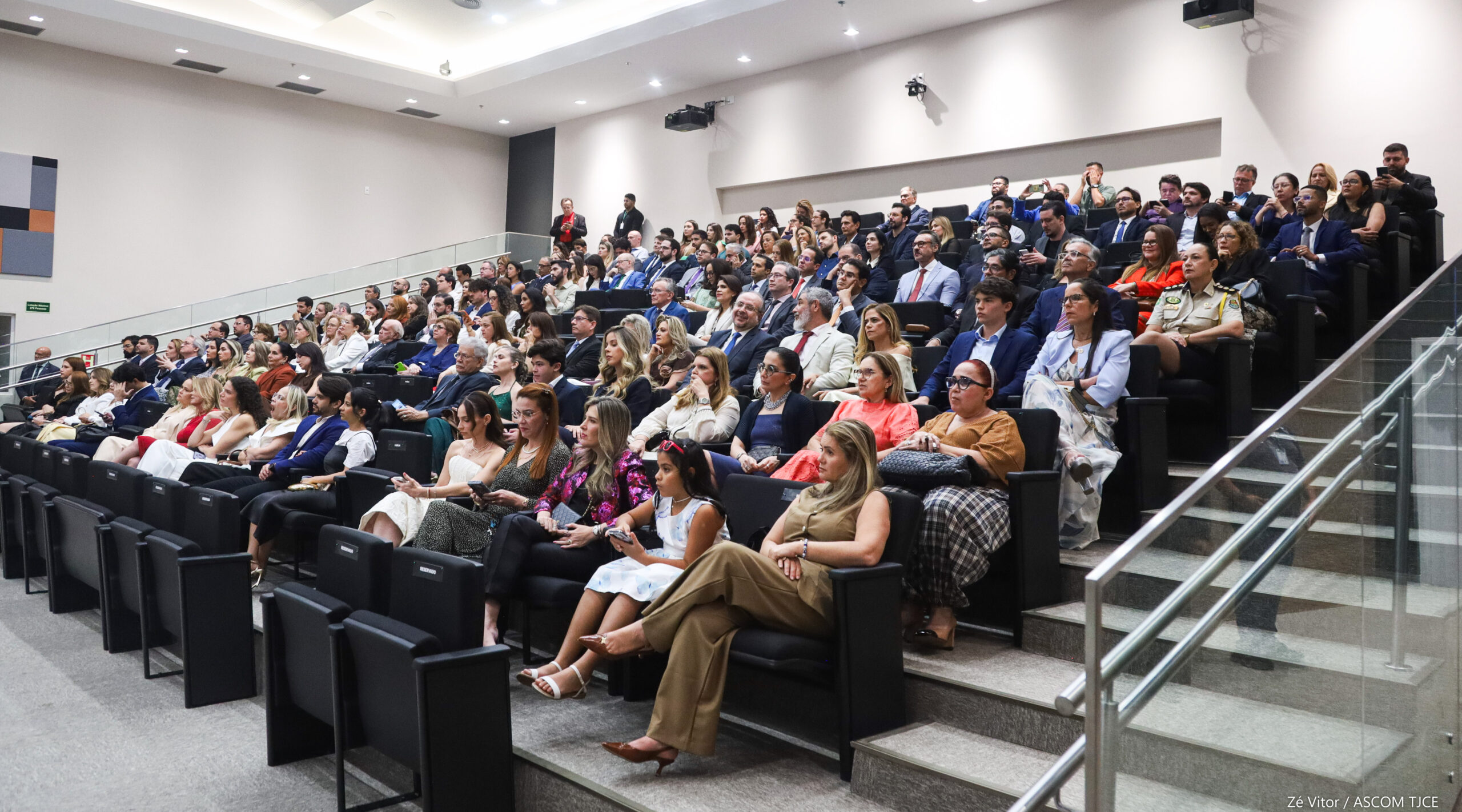
Representing a new chapter in the history of the TJCE, the Court's Plenary, located in the Cambeba Administrative Center in Fortaleza, has a capacity of 180 people in the audience and was designed to combine comfort, accessibility, and technological resources that contribute to the optimal performance of activities.
The Prosecutor General, Hebert Gonçalves Santos, endorsed the importance of the moment for all members of the Justice system. "I congratulate the Court's management on this Plenary, which is equipped with all the necessary infrastructure to provide an effective and even higher quality service to the people of Ceará."
The current composition of the Plenary includes 55 judges.
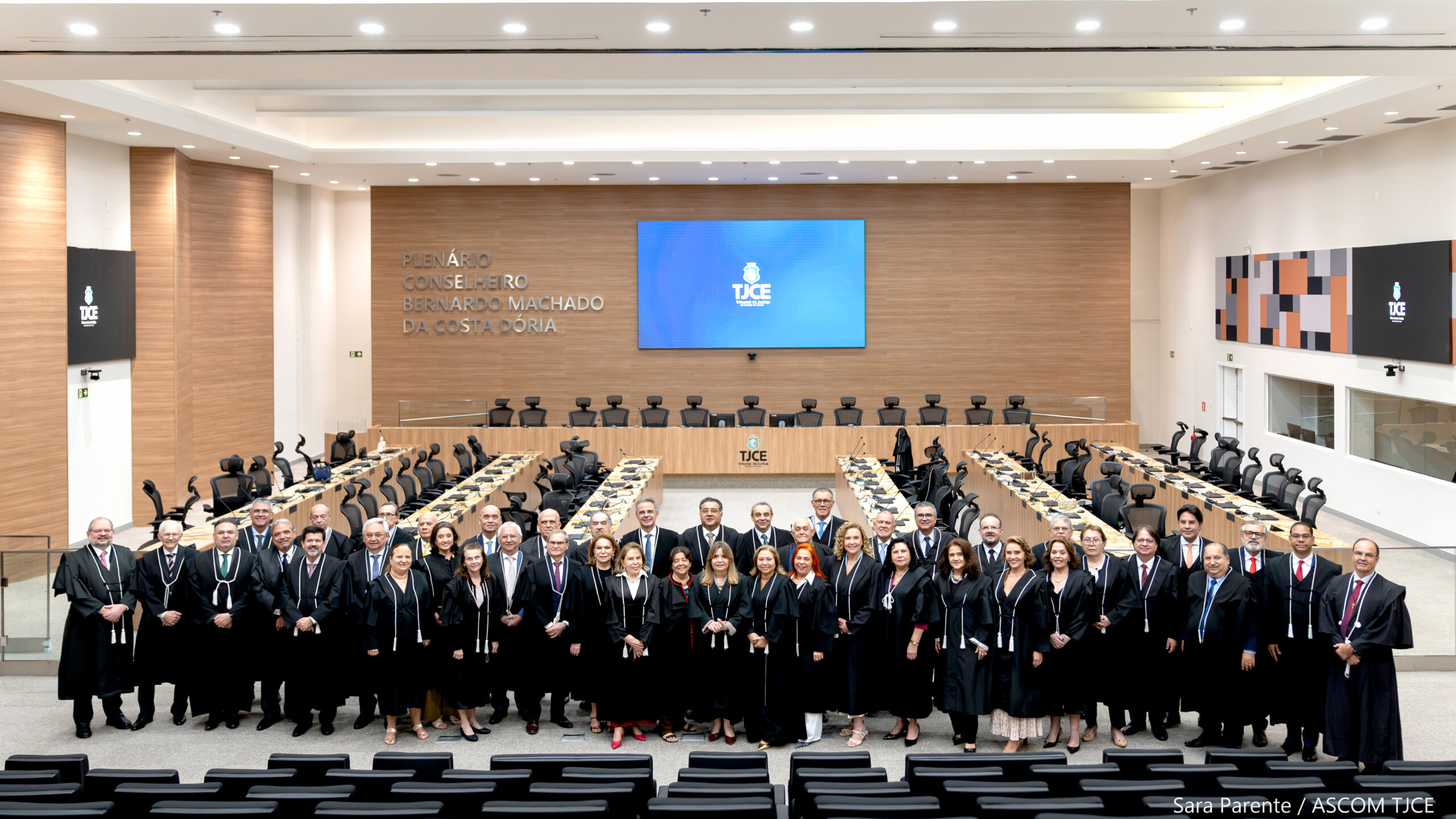
The current composition of the Plenary includes 55 judges and justices.
The current composition of the Plenary includes 55 judges and justices.
DETAILS OF THE SPACE
In addition to the plenary sessions of the Court, the structure will also host the sessions of the Special Chamber and the Public Law, Private Law, and Criminal Sections of the TJCE, as well as serve as an auditorium for events.
During the conception and execution of the project, special attention was paid to acoustic performance, with technical solutions aimed at controlling reverberation and sound isolation, ensuring comfort and high intelligibility of speech during sessions and events held in the space.
The new equipment received an investment of R$ 17,631,632.64, with R$ 7,775,514.26 coming from the State Government, disbursed through the Superintendência de Obras Públicas (SOP), and R$ 9,856,118.38 from the TJCE itself.
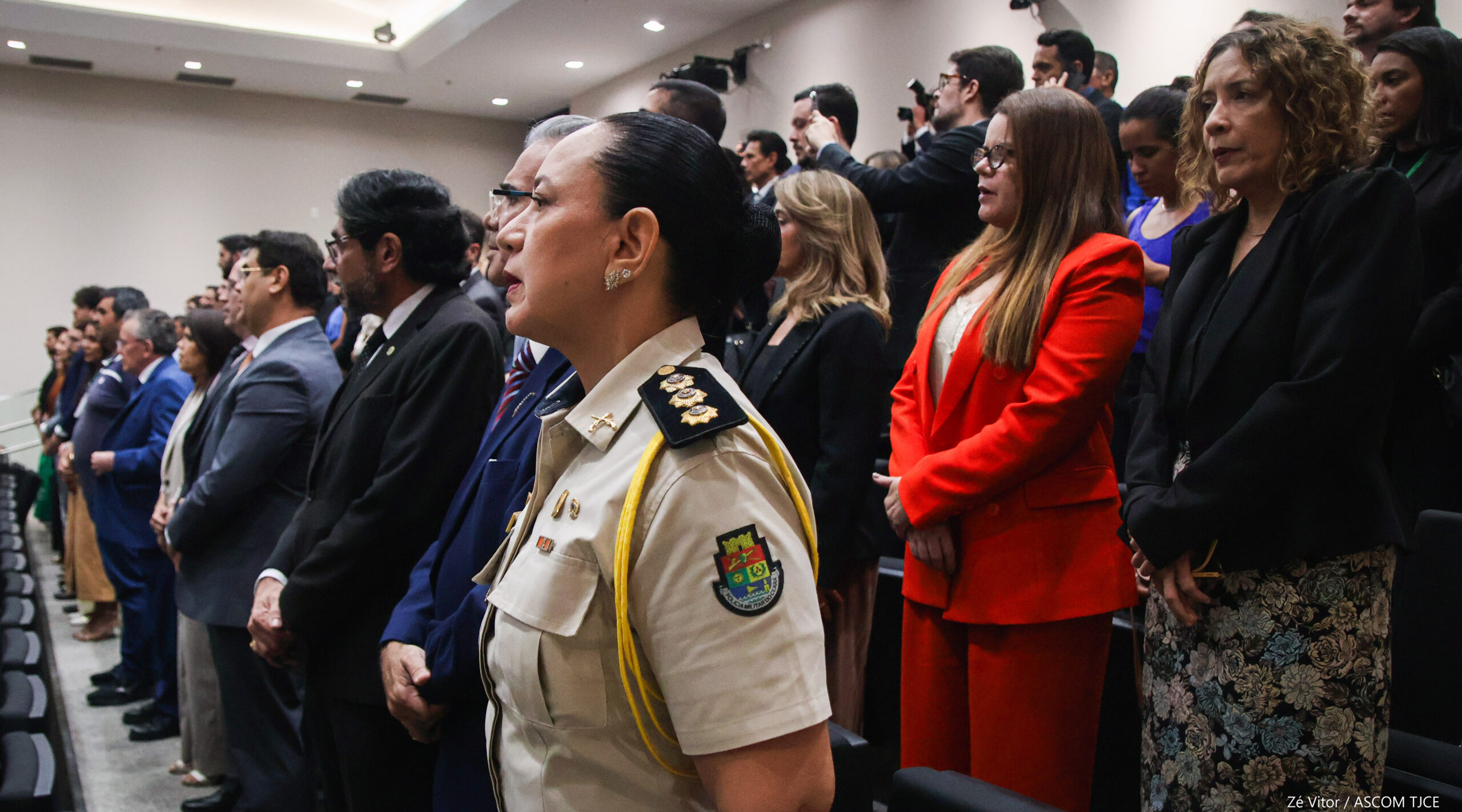
With an area of 1,783.70 m², the building also included the execution of complementary civil works, encompassing architectural modifications, structural reinforcements, special partitions, ceilings, finishes, windows, railings, and the installation of two elevators.
DISCOVER THE STORY BEHIND THE NAME THAT THE TJCE PLENARY HAS CHOSEN
First president of the TJCE, responsible for establishing the Court of Appeals in Fortaleza on February 3, 1874, Bernardo Machado da Costa Dória is the namesake of the TJCE's Supreme Court. He was also a councilor to the Emperor in the Brazilian Empire.
At the inauguration ceremony of the Court of Appeal, the judge spoke, emphasizing the expertise and integrity of the judges of that time, characteristics that would be necessary for the composition of the newly established Court. "I am well aware of the difficulties that the Court of Appeal of Ceará will face in its early years. To overcome them, I rely on the expertise, integrity, and competence of my fellow judges who make up the new court," he highlighted.
Bernardo Machado da Costa Dória graduated in Law at the Faculdade de Olinda, formerly the capital of Pernambuco, in 1837, at a time when there were only two law schools in the Brazilian Empire. One of the first Sergipians to graduate from the Olinda Academy, he was appointed as a judge in Alagoas and later in the courts of Vila Nova and Propiá, where he remained until 1854.
He was appointed judge of the Court of Bahia in 1863, and in 1872, transferred to Recife. Later, he made Fortaleza his home, leaving his mark on the history of the Judiciary of Ceará. Born in 1811, Bernardo Machado da Costa Dória died in 1878 in Recife, where he had returned in 1875. ClickHEREfor more details about the career of the first president of the TJCE.
FROM THE COURT OF APPEALS TO THE STATE JUDICIAL COUNCIL OF CEARÁ
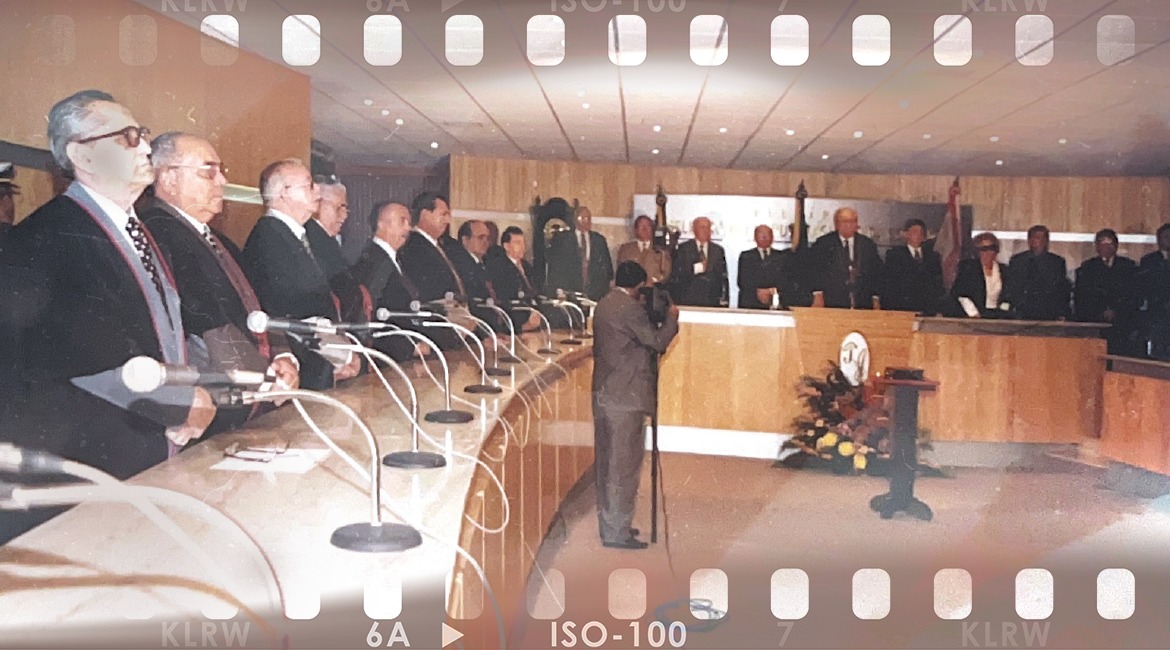
During the Imperial period, the Court of Justice of Ceará was called the Court of Relations. Its body was called the Bench or the Court Bench, and joint meetings constituted the plenary sessions. The first session was held on February 7, 1875, under the presidency of Judge Bernardo Machado da Costa Dória.
At this time, the court consisted of seven judges, one of whom was the Attorney General, continuing until the end of the Brazilian Empire.
With the 1921 State Constitution, the number of judges was fixed at six, in addition to the Attorney General. Through the 1925 State Constitution, the number of judges was increased to nine, including the Attorney General. In 1926, through State Law No. 2,445, the court was divided into two chambers, one criminal, with three members, and the second civil, with five members.
In 1934, the chambers were abolished and the court consisted of eight judges, excluding the Attorney General. In that year, positions corresponding to a fifth total were created, to be filled by lawyers and members of the Public Prosecutor's Office, in equal numbers (Fifth Constitutional). Ceará was the first state to implement the fifth constitutional, following the guidelines of the 1934 Federal Constitution.
In 1949, specifically on October 15, the Tribunal's Decree No. 13 mentions the term "Full Court," resulting in the formal establishment of the Full Court, with a session dated August 16, 1950, in the Official Gazette of September 01, 1950.
State Law No. 3,459, of December 05, 1956, fixed the composition of the court at 15 members. The court remained with 15 judges until 1994, when, with the enactment of State Law No. 12,342, of July 28, 1994, it was composed of 21 members.
In 1998, through State Law No. 12.828, of July 09, 1998, the Court will have 23 judges; in 2006, through State Law No. 13.813, of September 18, 2006, with 27 judges; in 2017, with State Law No. 16.397, of November 14, 2017, with 43 judges; in 2021, through State Law No. 17.743, of October 29, 2021, with 53 judges and in 2025, through State Law No. 19.579, of December 15, 2025, with 55 judges, which remains until now.
SEE THE LIST OF MEMBERS OF THE HONORABLE INAUGURATION COMMITTEE
Justice Heráclito Vieira de Sousa Neto, President of the TJCE;
State Attorney General, Rafael Machado (representing Governor Elmano de Freitas of Ceará);
Municipal Prosecutor of Fortaleza, Hélio Leitão (representing the Mayor of Fortaleza, Evandro Leitão);
Judge Paulo Régis Machado Botelho, a Justice Council member of the National Council of Justice;
Judge Maria Iraneide Moura Silva, President of the Regional Electoral Court (TRE-CE);
Federal Judge Leonardo Coutinho (representing Judge Roberto Machado, President of the Regional Federal Court of the 5th Region);
Prosecutor General, Herbert Gonçalves Santos;
José Valdomiro Távora de Castro Júnior, Vice-President of the Court of Accounts of Ceará (TCE);
Vice-President of the Brazilian Bar Association in Ceará (OAB-CE), David Sombra Peixoto (representing the President of the OAB-CE, Christiane Leitão);
Public Defender-General Leandro Sousa Bessa, representing the Public Defender-General of Ceará, Sâmia Costa Farias Maia;
Judge Daniela Lima da Rocha, director of the Clóvis Beviláqua Forum in acting;
Federal Judge Gustavo Melo Barbosa, vice-director of the Federal Justice Forum of Ceará;
Judge José Hercy Pontes de Alencar, president of the Ceará Association of Magistrates (ACM).