NASA’s Roman Space Telescope ‘Go’ for Launch

Por Elyna Niles-Carnes28/08/2026 às 18:063 visualizações
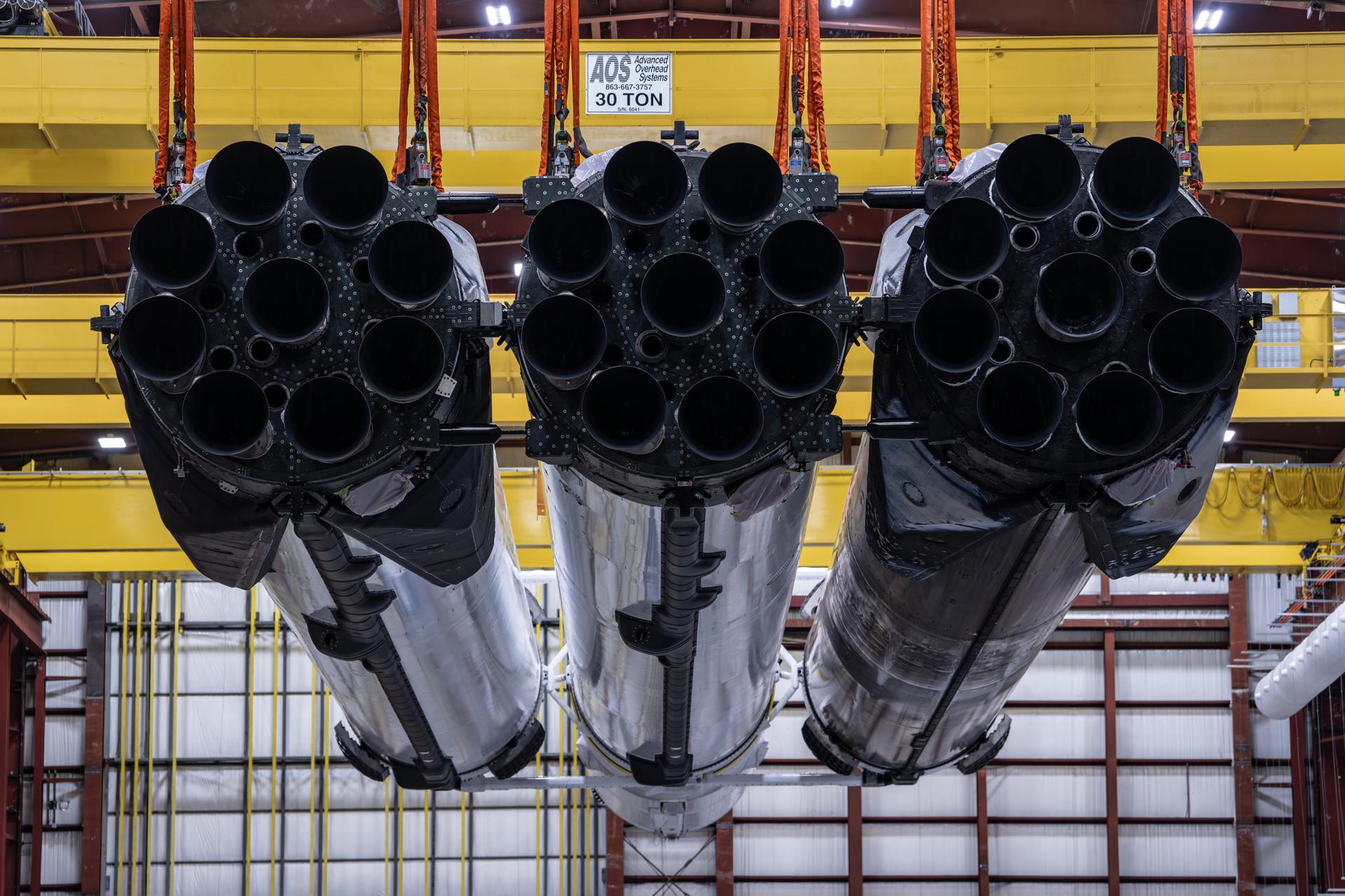
A SpaceX Falcon Heavy rocket is lifted by a yellow crane inside an industrial facility. The 27 black rocket engines stick out of the bottom or three white booster housings, some covered with soot.
NASA Clima
▶ Elyna Niles-Carnes · NASA Clima

Teams continue launch preparations on the SpaceX Falcon Heavy that will launch NASA’s Nancy Grace Roman Space Telescope, inside the SpaceX hangar at Launch Complex 39A at Kennedy Space Center in Florida on Wednesday, Aug. 26, 2026. SpaceX
Teams continue launch preparations on the SpaceX Falcon Heavy that will launch NASA’s Nancy Grace Roman Space Telescope, inside the SpaceX hangar at Launch Complex 39A at Kennedy Space Center in Florida on Wednesday, Aug. 26, 2026.
SpaceX

NASA’s Nancy Grace Roman Space Telescope is “go” for launch following completion of the agency and SpaceX’s Launch Readiness Review Friday at NASA’s Kennedy Space Center in Florida.

The Launch Readiness Review is the final review before proceeding into launch countdown. It confirms if Falcon Heavy, the Roman observatory, weather, and supporting teams are ready for liftoff.

Meteorologists with the U.S. Space Force’s Space Launch Delta 45 Weather Squadron are predicting a 60% chance of favorable weather conditions for launch, which is targeted for 7:26 a.m. EDT on Sunday, Aug. 30 from Launch Complex 39A at Kennedy.

This will be the sixth NASA primary mission with SpaceX to launch on a Falcon rocket from Kennedy, after IXPE (Imaging X-ray Polarimetry Explorer), Psyche, NOAA’s GOES-U (Geostationary Operational Environmental Satellite U), Europa Clipper, and IMAP (Interstellar Mapping and Acceleration Probe).

Roman’s deep, sweeping surveys will help investigate dark energy and dark matter, discover and characterize planets beyond our solar system, map billions of galaxies, study black holes, and share enormous amounts of data with both scientists and the public.

To learn more about the mission:

www.nasa.gov/roman

The post NASA’s Roman Space Telescope ‘Go’ for Launch appeared first on NASA Science.

Fonte
NASA Clima
Abrir original ↗
Esta notícia foi útil?

Debates 0

Seja o primeiro a contribuir com o debate.

Difunda suas informações e promova seu argumento

Não se acanhe de publicar alguma informação ou dado que possa ser positivo ou útil.

Para participar do debate, entre com sua conta ou crie uma gratuita.