
Prior to the Virtual Desk and digital service channels, a phone call inaugurated a new stage in the history of the Ceará Judiciary. Created on December 10, 1996, TeleJustiça was born with the mission of bringing the population closer to the services of the Judiciary and provided its first service on the day of its inauguration, when a citizen sought guidance on a usufruct action. What began as an information channel became the foundation of a service model that is today a reference in welcoming, accessibility, and humanization at the Court of Justice of Ceará (TJCE).
This journey was celebrated on Monday (September 21st) during a special event held in the atrium of the TJCE headquarters. The event brought together judges, staff, collaborators, and representatives of partner institutions to commemorate the 30th anniversary of the service and highlight advances related to innovation, accessibility, and the quality of service provided to the public.
The president of the TJCE, Justice Heráclito Vieira de Sousa Neto, highlighted the context in which TeleJustiça was created and the change brought about by the service during the period when services still required travel to the units. "TeleJustiça emerged as a novelty. There was no access to the judiciary as there is today. It is a structure that has evolved and primarily benefits citizens. Therefore, this moment is a celebration and also a recognition of the work carried out in favor of society. Congratulations to everyone."
INNOVATION FOR WOMEN'S PROTECTION
One of the main initiatives of the program was the launch of aNew feature in the TJCE Mobile appfocused on requesting urgent protective measures. The tool will allow women in situations of domestic violence to request protection more quickly, safely, and easily, directly from their mobile phones.
During the presentation, the president of the State Coordination for Women in Domestic and Family Violence, Judge Vanja Fontenele Pontes, announced that the tool represents another advance in expanding access to justice for women in vulnerable situations. "Today, women who have experienced violence will be able to request a protection order through their cell phones. And in a quick way. It is a great joy to see how access to justice is being facilitated."
Judicial officials, staff, collaborators, and representatives of partner institutions participated in the event.
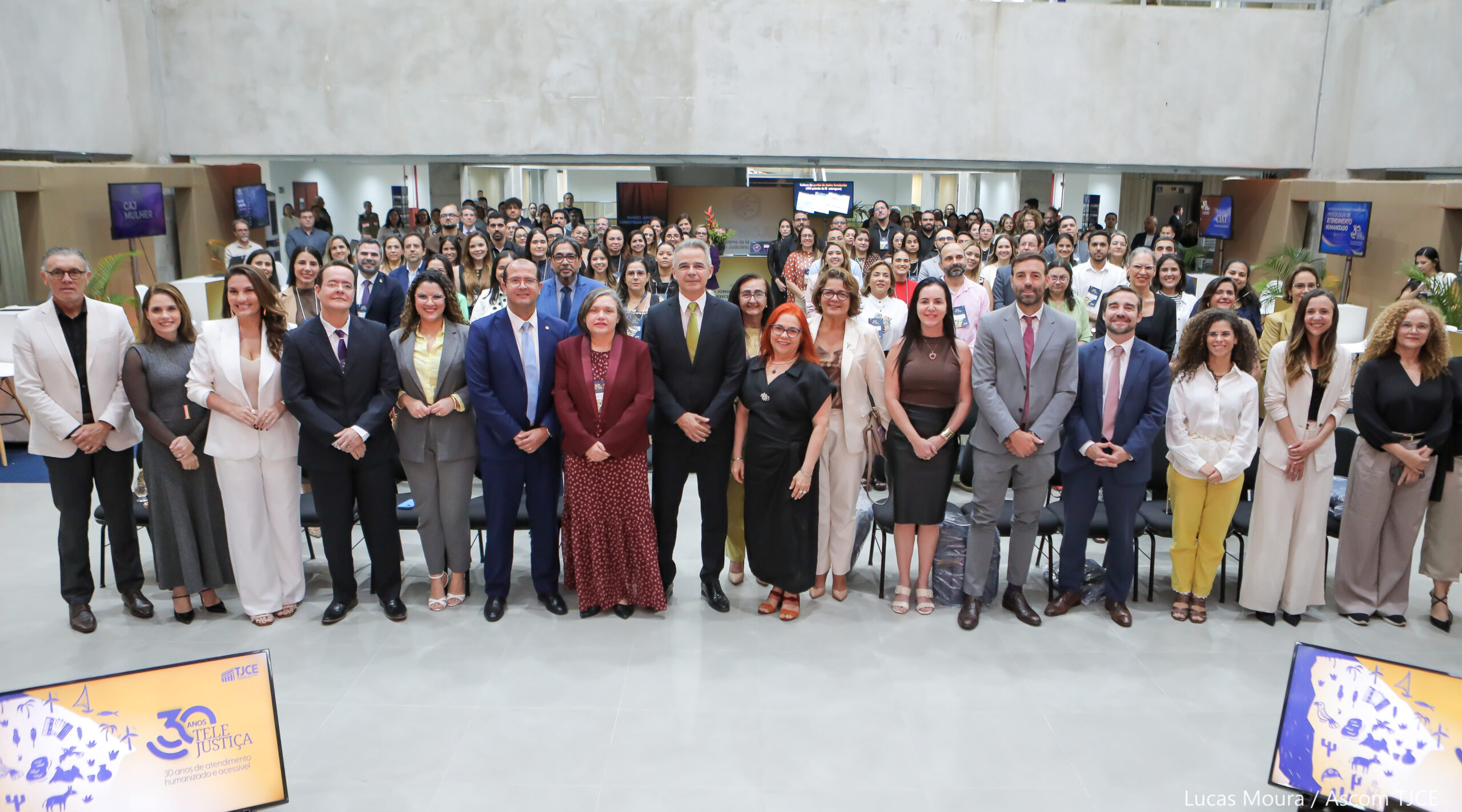
The event featured distinguished judicial officials, staff, collaborators, and representatives from partner institutions.
TECHNOLOGY AND WELFARE
During the event, the state director of Customer Service at the TJCE, Nelson Ricardo de Moraes Nogueira, recalled the milestones that contributed to the evolution of citizen service. In a historical review of the path initiated with TeleJustiça, he cited the investments in technology, the expansion of service channels, and the construction of a model centered on innovation, accessibility, and the humanization of services provided to the population.Check HERE the TeleJustiça path.
One of the founders of the current customer service structure of the TJCE, he also emphasized the importance of maintaining the balance between technological innovation and humanized service. "For this innovation to reach the citizen, there is a very valuable resource, which is the human being. The service, today, is welcome. When we are able to combine strategy, technology, and service, we realize that we are on the right path. Our goal is to make it possible for the population to have increasingly easy, welcoming, and efficient access to justice," he said.

Another highlight of the program was the panel "Tradition and Innovation: The Transformation Journey over 30 Years," which featured judges Dayana Cláudia Tavares Barros de Castro and Ana Carolina Montenegro Cavalcante, with moderation by state director Nelson Nogueira. During the event, the judges discussed the challenges of reconciling technological innovation with humanized service in the judicial system.
The judge who spearheaded the new Special Testimony process in Ceará and is the head of the 2nd Court of Boa Viagem, Dayana Cláudia Tavares Barros de Castro, highlighted initiatives aimed at protecting children and adolescents who are victims of violence, particularly the protocols that seek to prevent revictimization during the special testimony. "The first time a person is received makes all the difference. They don't need to understand the structure of the Judiciary; they need to feel that they are being heard and that someone will help them."
Meanwhile, Judge Ana Carolina Montenegro Cavalcante, who is a co-manager of the TJCE's AI and Robotics projects, stated that innovation in the judiciary must always be accompanied by sensitivity and care for the most vulnerable people. "Technology will never work if there is no humanity on the other side. People just want to be heard, and no one will be able to replace that."
A STORY BUILT BY PEOPLE
The program also featured the cultural segment "Protocol in Verse," presented by the cordel artist Julie Oliveira and the sanfoneiro Carlos Freitas, who translated the court's service protocols into popular language, emphasizing the importance of accessible communication as a tool for bringing the institution closer to society.
The event concluded with the keynote speech "The Art of Enchanting and Retaining Customers," delivered by journalist and speaker Mariana Sasso, who addressed topics such as empathy, communication, and excellence in customer service. "Serving customers is not just about listening. Customer service is about providing a welcoming experience. It's not just about informing or guiding, but about making the customer feel valued."
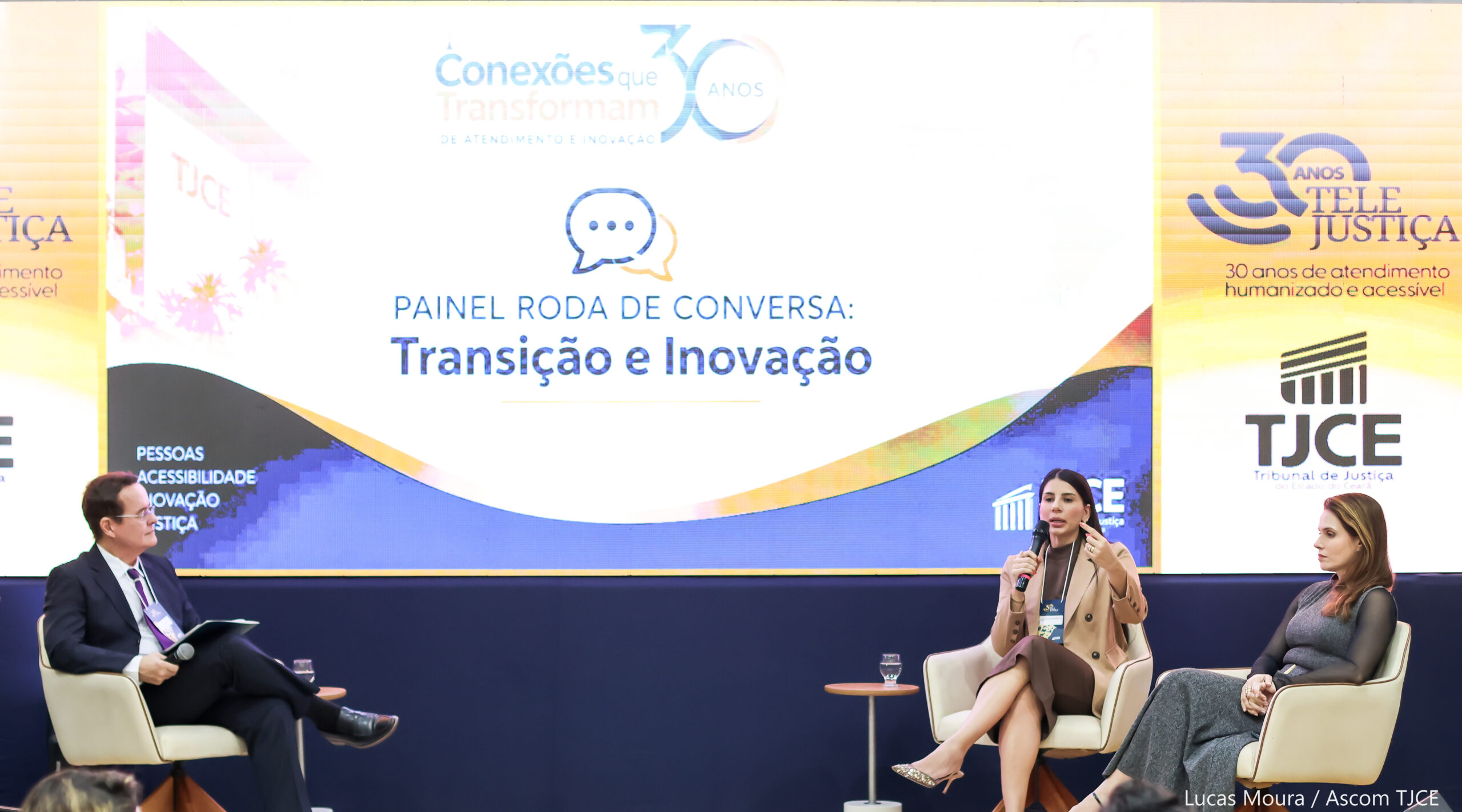
During the presentation, Mariana Sasso highlighted the work of the TJCE's customer service teams and praised the commitment of the professionals to welcoming users. "Each person working at TeleJustiça represents the institution. When we provide users with an extraordinary experience, we also make them trust the justice system," she observed.
Interactive Circuit
The event program also included the "30 Years of TeleJustiça Journe" circuit, an interactive initiative to revive the history of the service and present the current initiatives available to internal and external audiences.
The event featured nine booths, an interactive quiz, photo and video spaces, and an exhibition that recovers moments from the TeleJustiça journey to the current Judicial Service Center (CAJ). Throughout the tour, participants learned about the service's timeline, humanized service protocols, the role of the Internal Service Center (CIAT), the functions of TeleJustiça, and initiatives related to innovation and governance technology.
Additionally, presentations were made on the CAJ Mulher (Women's Justice Center), the Central's work in the PopRuaJUD (Street Justice Center) program, and the actions of the Ceará State Judiciary Modernization Program (Promojud). Upon completing the tour of the booths, participants received a special gift.
For Maria de Jesus Pontes de Queiroz, director of the secretariat of the 2nd Court of Beberibe, the initiative facilitates access to information, especially for those working in the interior. "This is an excellent initiative because it brings the employee and the employee closer together, especially those who work in the interior, who have the opportunity to access information in a more practical and faster way, about the services offered by the court. Due to the demand for our daily activities, people end up not participating effectively in all the programs that the court makes available to the internal and external public."
THE TELEJUSTICE
The celebrations for the 30th anniversary of TeleJustiça revive the legacy built since its creation on December 10, 1996, and its contribution to expanding access to justice in Ceará. Considered the initial cell of the current humanized model of service provided by the Ceará judiciary, the channel remains one of the most sought after by the population in search of procedural information, guidance on judicial services, and referrals to other institutions, according to their needs.Check HERE the trajectory of TeleJustiça.

Over these nearly three decades, the service has tracked technological and social transformations, expanded communication channels with the public, and helped build a customer-centric service culture. Today, the legacy of TeleJustiça is present in the Judicial Service Centers (CAJs), which already number 54, distributed throughout the state, in the Digital Inclusion Points (PIDs), in the Virtual Counter, and in various other initiatives that bring the Ceará justice system closer to the population.
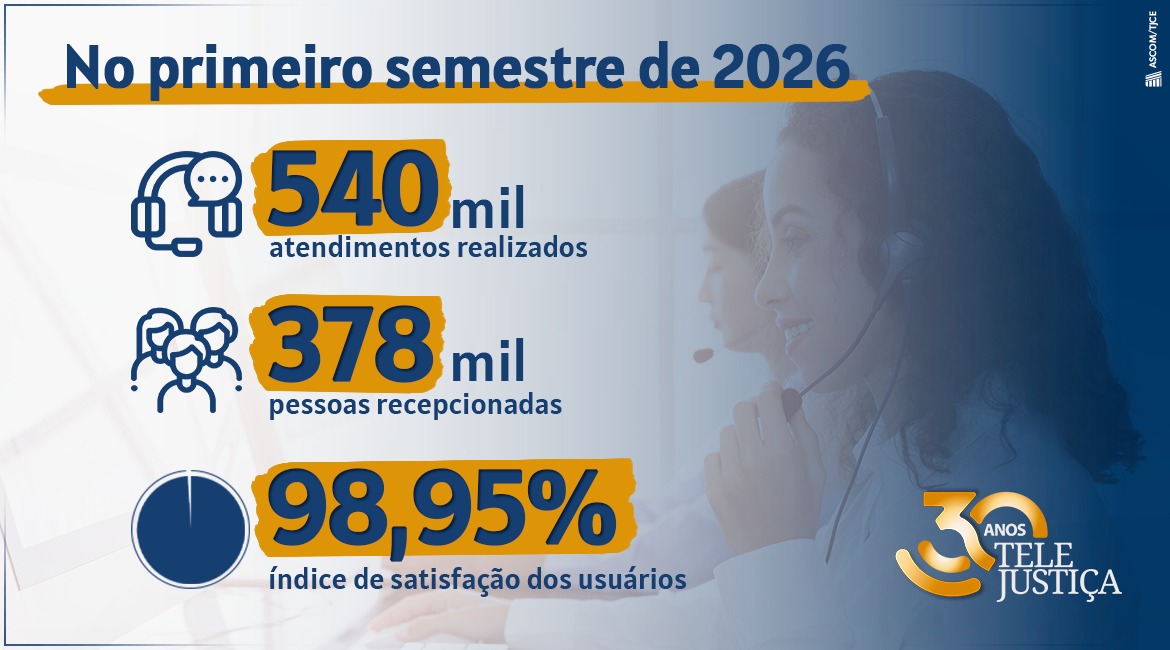
As a result of the humanized service policy developed by the TJCE, in the first six months of 2026, more than 540,000 services were provided and approximately 378,000 people were received, with a satisfaction rate of 98.95% recorded in almost 40,000 surveys completed by users.