NASA’s Roman Space Telescope: Falcon Heavy Side Boosters Begin Return

Por Elyna Niles-Carnes30/08/2026 às 11:311 visualizações
NASA's Roman Space Telescope: Falcon Heavy Side Boosters Begin Return
NASA Clima

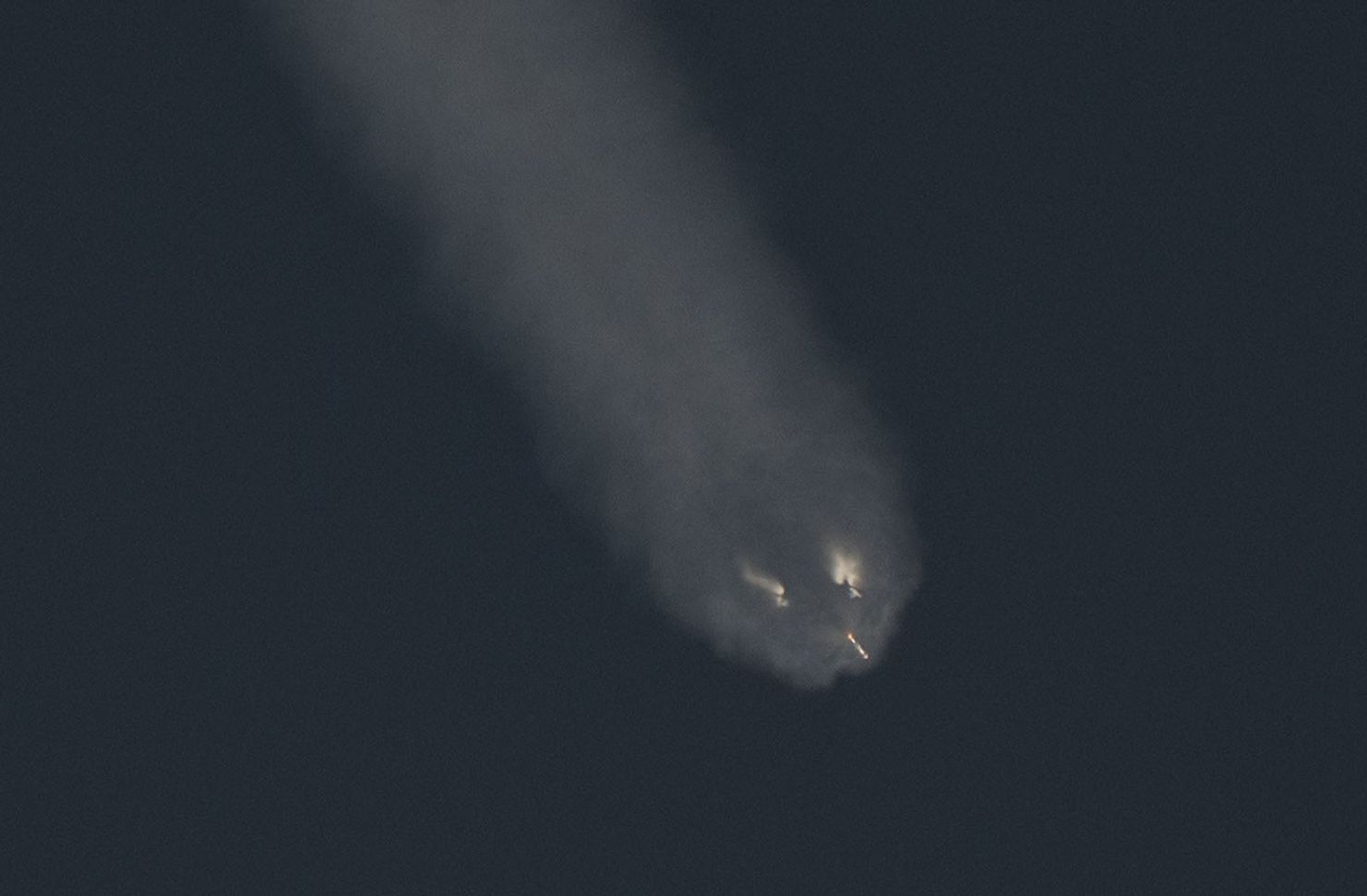
The side boosters of a SpaceX Falcon Heavy rocket are seen separating from the center core during the launch of NASA’S Nancy Grace Roman Space Telescope from Launch Complex 39A, Sunday, Aug. 30, 2026, at NASA’s Kennedy Space Center in Florida.NASA/Joel Kowsky
The side boosters of a SpaceX Falcon Heavy rocket are seen separating from the center core during the launch of NASA’S Nancy Grace Roman Space Telescope from Launch Complex 39A, Sunday, Aug. 30, 2026, at NASA’s Kennedy Space Center in Florida.
NASA/Joel Kowsky

The two side boosters on the SpaceX Falcon Heavy carrying NASA’s Nancy Grace Roman Space Telescope have separated from the center core.

After shutting down their engines at about 2 minutes, 24 seconds after launch, the boosters separated seconds later and executed a flip maneuver to orient themselves for their return. Their boost back burns began shortly afterward and are expected to last just over one minute.

The SpaceX Falcon Heavy’s center core continues powering the second stage and Roman on its journey. Main engine cutoff is planned for T+3 minutes, 51 seconds, followed by stage separation and ignition of the second-stage Merlin Vacuum engine.

The side boosters are scheduled to land near the launch site at about T+7 minutes, 40 seconds, at Cape Canaveral Space Force Station. Watch live on NASA+ and a variety of platforms.

Learn where to watch: www.nasa.gov/live.

The post NASA’s Roman Space Telescope: Falcon Heavy Side Boosters Begin Return appeared first on NASA Science.

Fonte
NASA Clima
Abrir original ↗
Esta notícia foi útil?

Debates 0

Seja o primeiro a contribuir com o debate.

Difunda suas informações e promova seu argumento

Não se acanhe de publicar alguma informação ou dado que possa ser positivo ou útil.

Para participar do debate, entre com sua conta ou crie uma gratuita.