
Editor’s note: Blog has been updated to reflect the approximate time for acquisition of signal.
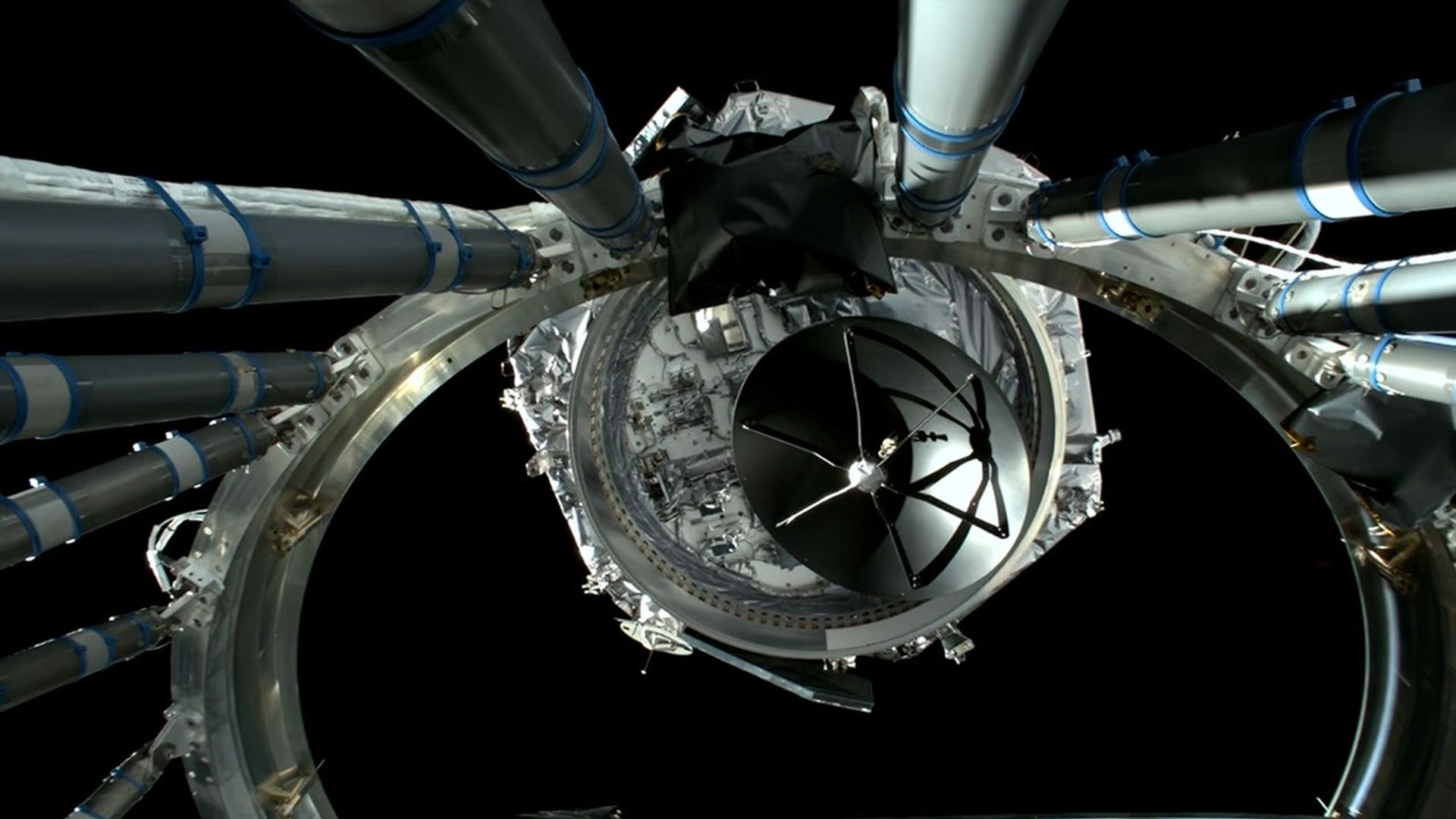
NASA’s Nancy Grace Roman Space Telescope separated from the SpaceX Falcon Heavy’s second stage at 7:57 a.m. EDT and is flying on its own.
Roman established communications through a NASA Tracking and Data Relay Satellite earlier in ascent at 7:33 a.m. Mission controllers will continue monitoring the observatory as it begins its journey toward an orbit around the second Sun-Earth Lagrange point, or L2, about 1 million miles from Earth.
When Roman begins science operations, the Near Space Network will transmit Roman’s high rate science data, while the Deep Space Network will continue providing critical tracking data, including the precise range and angle measurements that show ground teams where Roman is in space. Additional support for downlinking Roman data will come from ESA (European Space Agency) and JAXA (Japan Aerospace Exploration Agency), through their New Norcia and Misasa ground stations, respectively.
In the next 30 minutes, Roman will deploy its Solar Array Sun Shield, which provides power and doubles as a thermal shield. After separation, the four outer panels swing into place to form the full six panel array, keeping the observatory powered and cool for the journey to L2.
Follow post-launch updates at https://science.nasa.gov/blogs/roman/.
The post NASA’s Roman Space Telescope Flying on Its Own appeared first on NASA Science.