Astronomers Solve Cosmic Cold Case with NASA Hubble Data

Por HQ Web Team06/10/2026 às 16:0932 visualizações
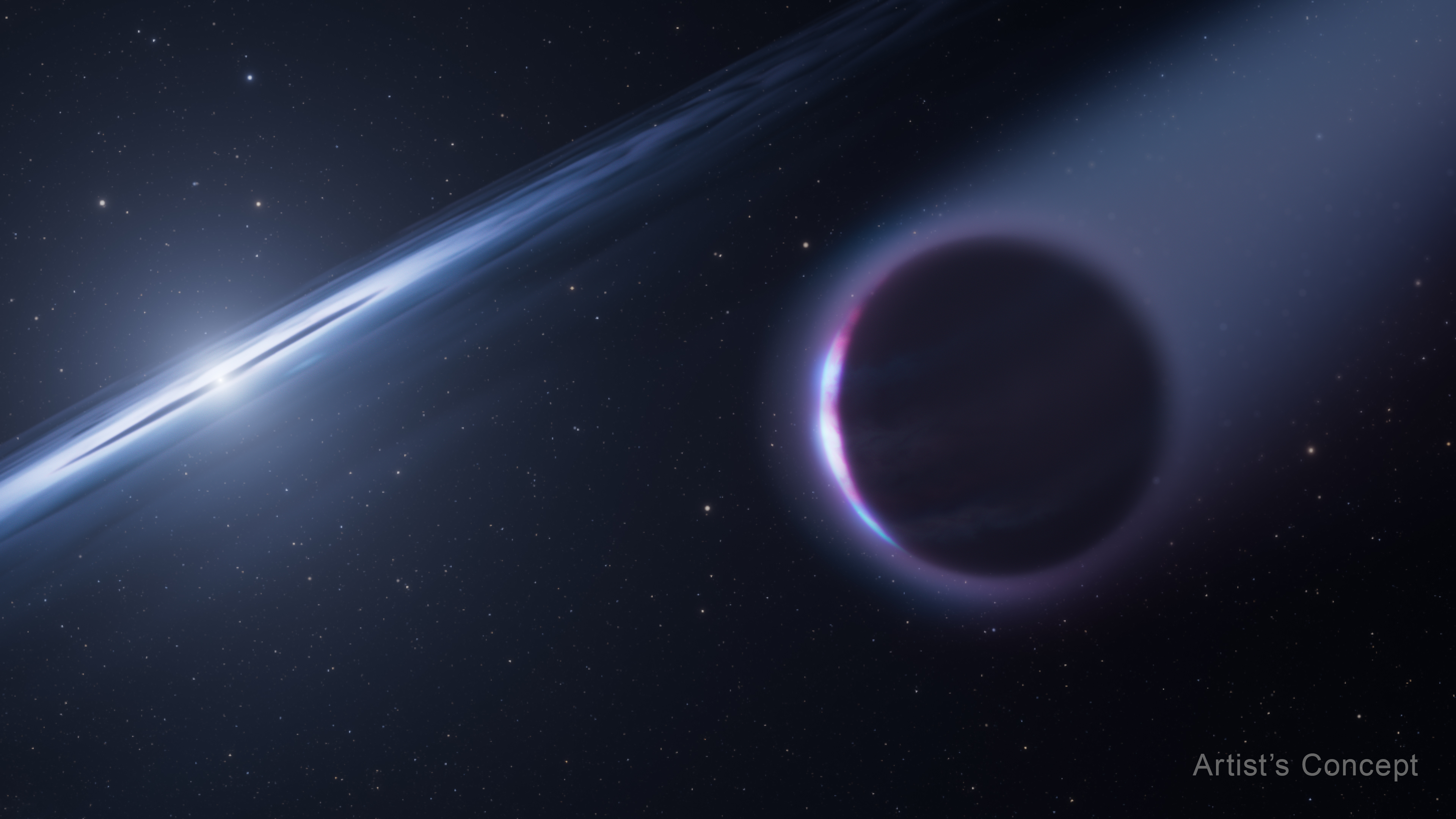
A gaseous planet in the right foreground, seen mostly in silhouette, orbits a small, white star in the background at left. The star is surrounded by a thin, bright white disk tilted from lower left to upper right. A semi-transparent tail of material comes off the planet toward upper right. Distant stars dot the black background of space.
NASA
NASA, ESA, Leah Hustak (STScI)

Diligent sleuthing by astronomers uncovered a surprising chemical clue that indicates the white dwarf star HS 0209+0832 may host a second-generation planet. This artist’s concept released on Oct. 5, 2026, depicts that possible explanation.

The white dwarf is the “dead” core of a star that burned through all of its nuclear fuel and lost its outer envelope of gas and dust to space. The second-generation planet formed from that cast-off gas and dust, which is why its chemical content is very different from a planet that formed as its host star was forming.

Learn more about this scientific discovery.

Image credit: NASA, ESA, Leah Hustak (STScI)

Esta notícia foi útil?

Debates 0

Seja o primeiro a contribuir com o debate.

Difunda suas informações e promova seu argumento

Não se acanhe de publicar alguma informação ou dado que possa ser positivo ou útil.

Para participar do debate, entre com sua conta ou crie uma gratuita.