
The Orion Program, managed by NASA’s Johnson Space Center in Houston, is a broad national and international collaboration. Multiple NASA centers, international partners, and industry contractors contribute to the spacecraft, from building hardware to supporting mission operations.

Johnson Space Center
NASA’s Orion program is managed at NASA’s Johnson Space Center in Houston, where engineers oversee the design, development, and testing of the spacecraft, as well as spacecraft manufacturing taking place across the country and in Europe. Johnson is also home to the nation’s astronaut corps and the iconic Christopher C. Kraft Mission Control Center.
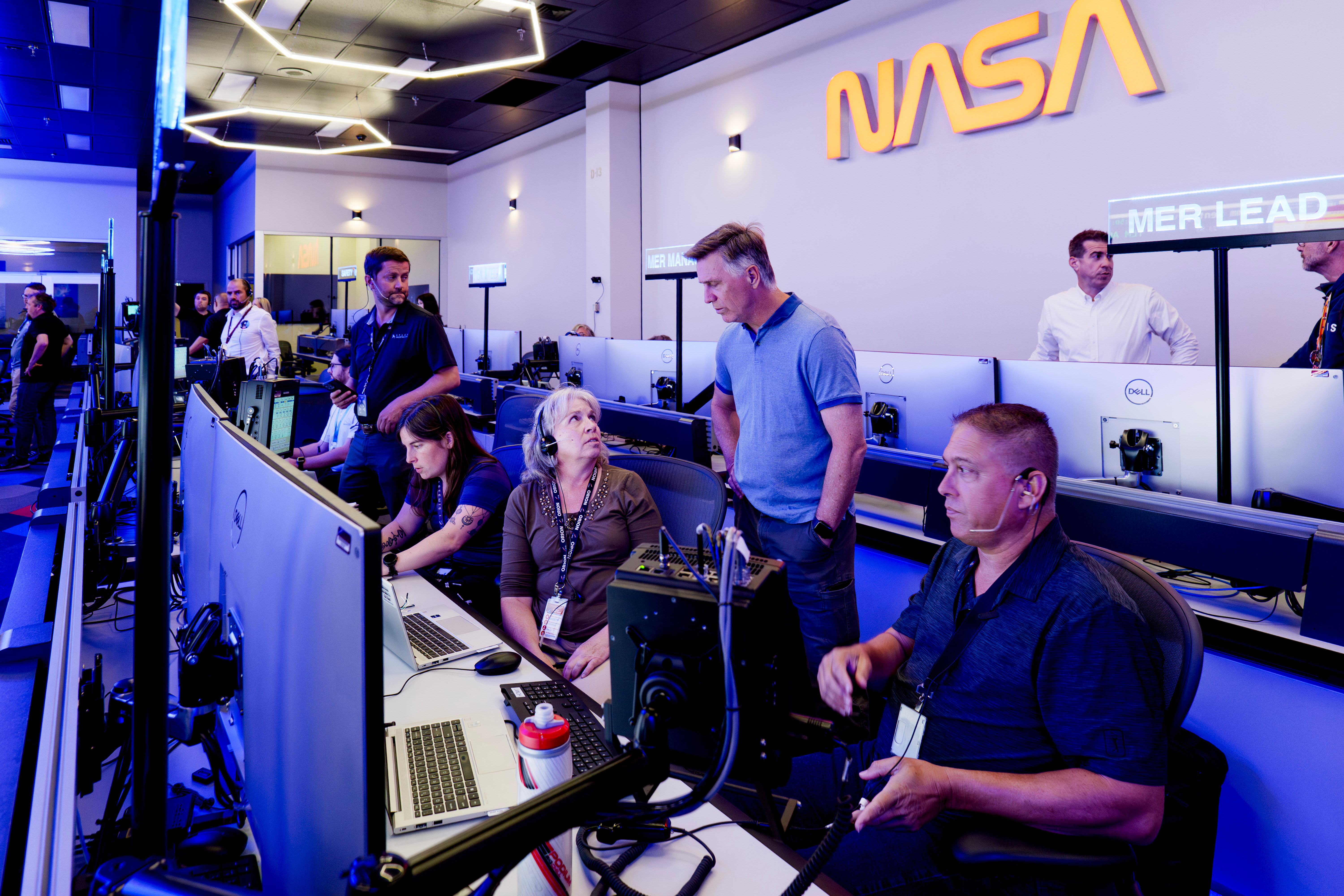
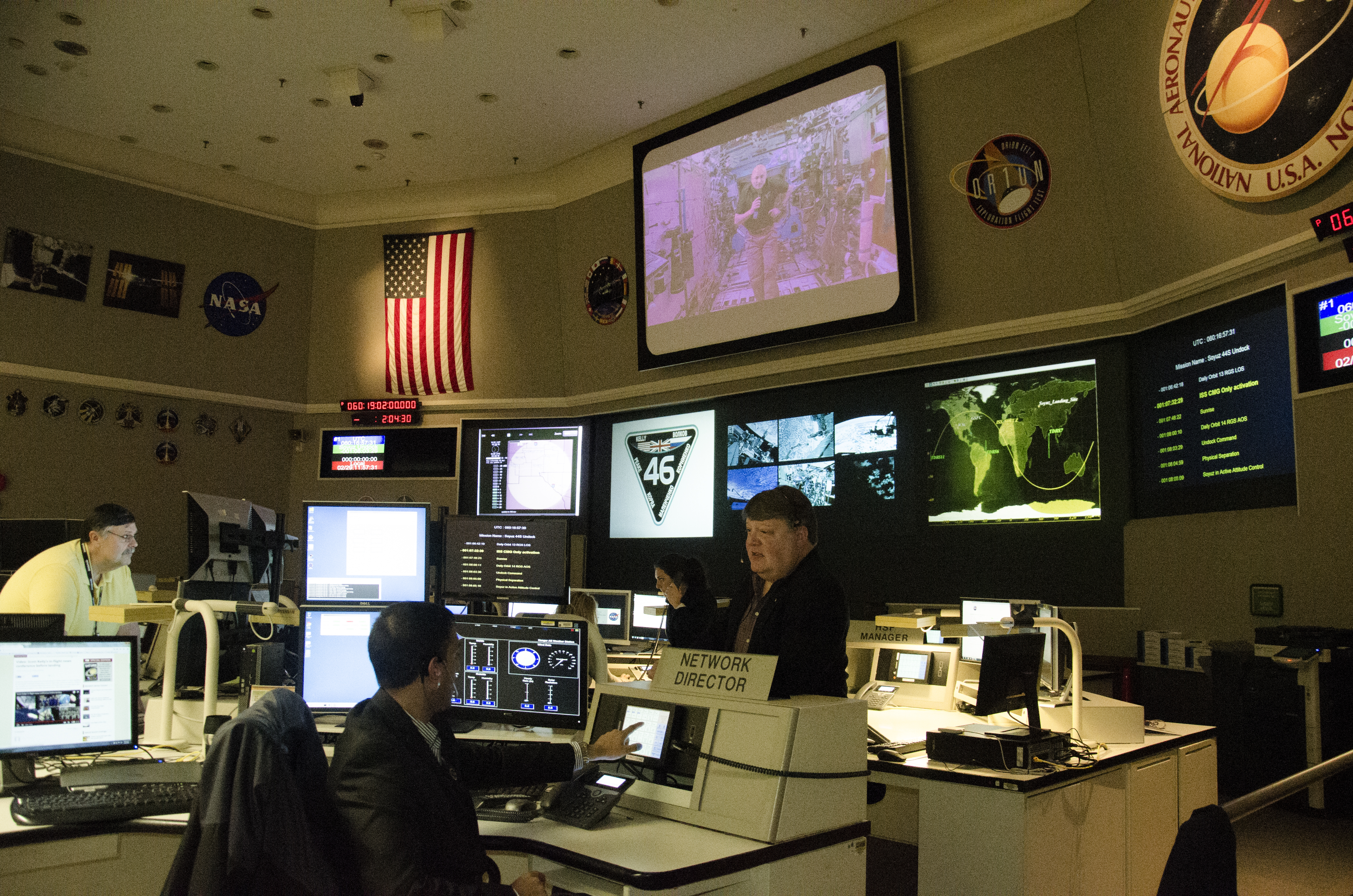
Mission Control Center (MCC)Since 1965, NASA’s MCC has been the helm of America’s human spaceflight and is the primary facility where flight controllers command and control human spacecraft missions. MCC is the facility from which flight operations personnel will remotely monitor and operate the Orion spacecraft and receive data from Orion and the SLS rocket during Artemis missions.
The MCC is composed of several flight control rooms (FCRs), including FCR-1; FCR-2; and the Red, White, and Blue FCRs. Johnson upgraded the White FCR from its shuttle legacy configuration into a modern mission control configuration to serve as the mission control for flights of NASA’s Orion spacecraft.
The MCC also houses the Orion Mission Evaluation Room (MER), which provides Orion Program engineering expertise to the flight control team during all phases of the mission, from pre-launch countdown to recovery, as well as provides Orion Program engineering support to the Mission Management Team (MMT) and during any technical discussions regarding vehicle performance.
White Sands Test Facility
NASA’s White Sands Test Facility in Las Cruces, New Mexico is a component of Johnson that tests and evaluates potentially hazardous materials, spaceflight components, and rocket propulsion systems for NASA centers, other government agencies, and commercial industry. This work includes testing Orion’s service module, the powerhouse of the spacecraft that provides in-space propulsion, power, and other astronaut life-support systems, including consumables like water, oxygen, and nitrogen.

Kennedy Space Center
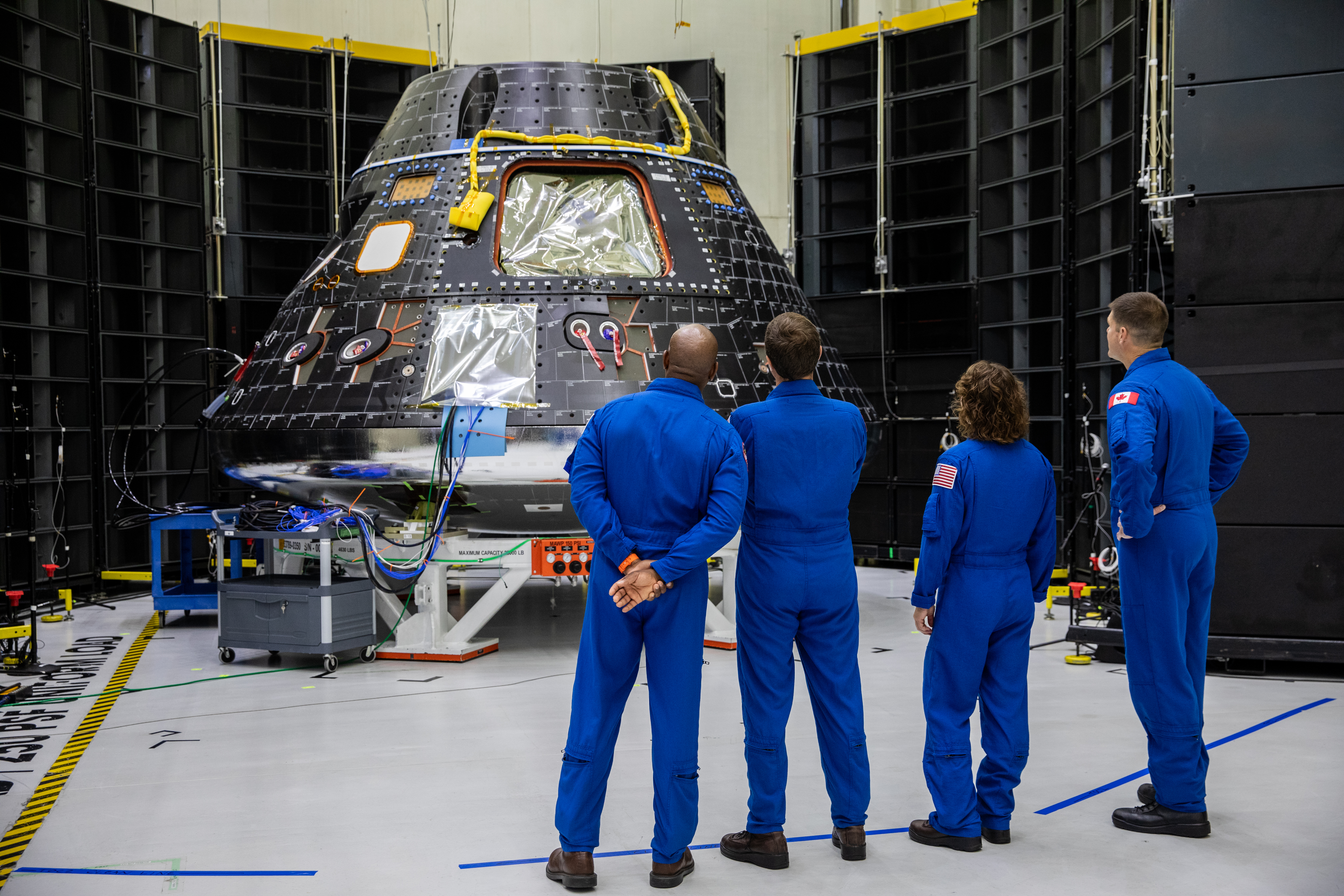
Neil Armstrong Operations and Checkout (O&C) BuildingThe Operations & Checkout (O&C) Building at NASA’s Kennedy Space Center in Florida is where Orion spacecraft are assembled, integrated, and tested for Artemis missions. The O&C contains a large room called a high bay that operates as a high-tech spacecraft factory. The high bay includes unique tooling stations, test fixtures, chambers, and clean rooms for the buildup and testing of the spacecraft.
The crew module’s primary structure, the pressure vessel, arrives at the O&C following initial manufacturing at NASA’s Michoud Assembly Facility in New Orleans. The European Service Module is assembled at Airbus facilities in Bremen, Germany, before being shipped to the O&C for integration with the crew module adapter and crew module thereafter.
The facility is capable of processing multiple spacecraft in varying production phases. Orion spacecraft for EFT-1 and Artemis I and II have been completed in the O&C with the assembly of spacecraft for future Artemis missions well underway.
Glenn Research Center
NASA’s Glenn Research Center in Cleveland serves as the lead for ESA/Airbus integration and management. It also leads in spacecraft mechanisms, pyrotechnics, and structures. Furthermore, the center is a co-lead for the crew and service module and spacecraft adapter. It also provides support for spacecraft integration; test and verification; avionics, power and wiring subsystems; and software and guidance navigation & control.
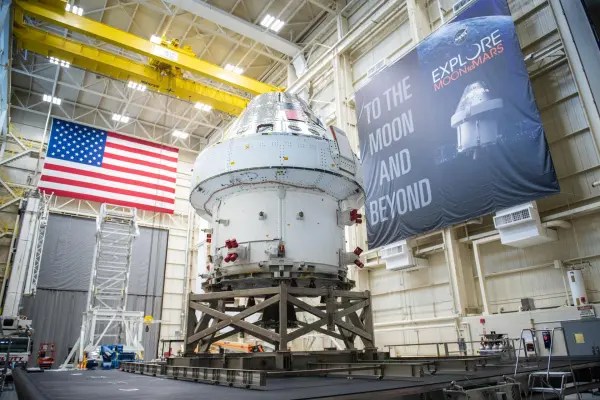
Neil A. Armstrong Test Facility, formerly known as Plum Brook Station, is a remote test facility near Sandusky, Ohio, and home to four world-class test facilities, which perform complex and innovative ground tests for the international space community. Engineers conducted major tests for the Orion spacecraft at the facility’s Space Environments Complex, which houses the world’s largest and most capable space environment simulation facilities. These include the Space Simulation Chamber, which simulates the thermal and vacuum conditions of space and provides an environment in which to test electromagnetic interference; the Reverberant Test Facility, a 100,000-cubic-foot reverberant acoustic chamber; and the Mechanical Vibration Facility, a vibration table capable of testing an entire spacecraft in all three axes.
Michoud Assembly Facility
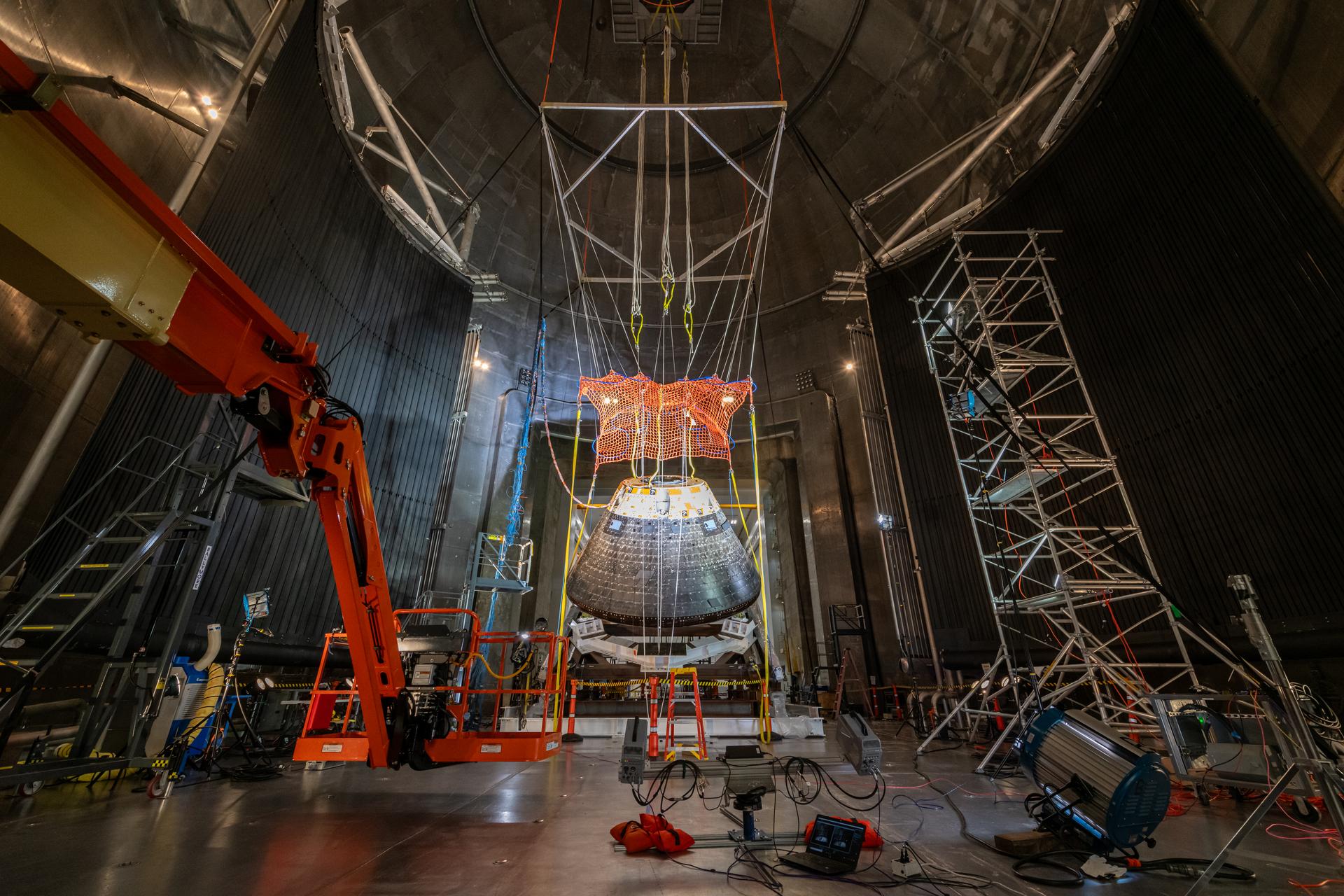
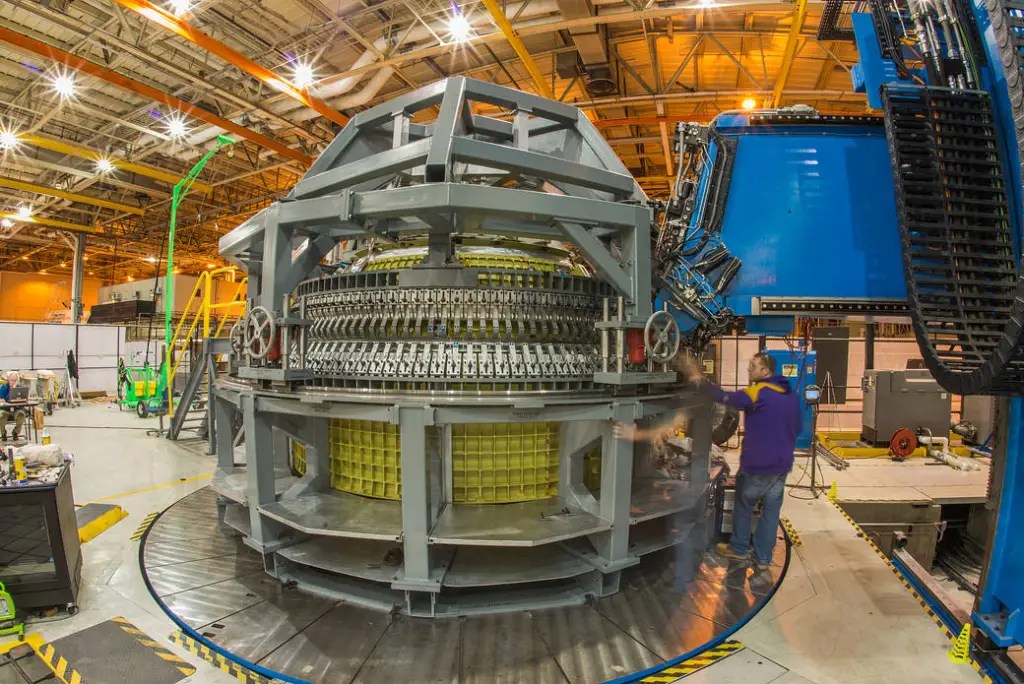
Michoud Assembly Facility in New Orleans is a component of Marshall where manufacturing and assembly of some of the largest parts of the Orion spacecraft, including Orion’s pressure vessel, take place.
The work done at Michoud includes the production and welding of the Orion crew module pressure vessel structure, the production of the crew module adapter structure, heat shield block material, composite panels, and service module fairings, and the assembly and integration of LAS structural components.
Armstrong Flight Research Center
For the Artemis II mission, Armstrong Flight Research Center in Edwards, California has provided system engineering and integration expertise to assist with an Orion heat shield spectrometer system (OHSS) that will provide valuable data used to enhance astronaut safety.
Armstrong has also supported Orion’s flight testing in preparation for Artemis I and beyond. Armstrong was the developmental flight instrumentation (DFI) lead for Ascent Abort-2 and supported flight test development and system integration, ground operations definition, planning, and personnel; it also provided component testing.
The team also led test vehicle integration and DFI for the Pad Abort-1 (PA-1) flight test and was the integrated product team lead for construction of the flight’s launch site. Armstrong also led the Ikhana remotely piloted aircraft that was used to capture live video during the Orion entry and landing for Exploration Flight Test-1. The center also supported Orion’s Capsule Parachute Assembly System (CPAS) during parachute qualification testing.
Goddard Space Flight Center
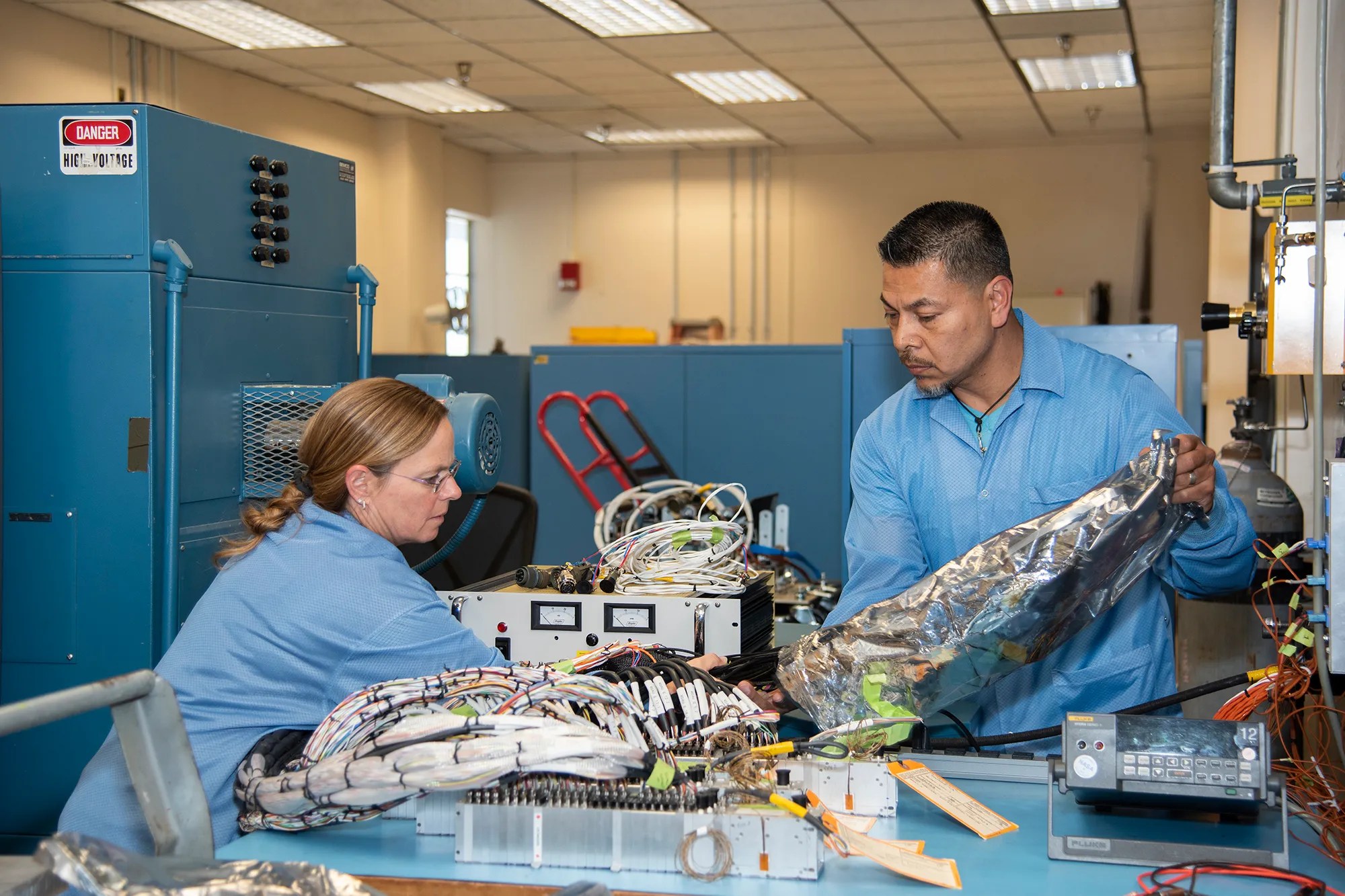
Goddard Space Flight Center in Greenbelt, Maryland, supports Orion communication and navigation operations through NASA’s Near Space Network (NSN), including a constellation of Tracking and Data Relay Satellites (TDRS) and associated ground stations. The center also provides tracking and navigation support with its Flight Dynamics Facility.
Goddard supports the NASA Communications Network (NASCOM), which carries command and telemetry data and provides mission-critical voice loops between ground stations, mission control centers, and other ground segments. The Goddard team also supports NASA’s Search and Rescue office, which provides the responsive location services for Orion crew recovery.
Goddard also manages the Orion Artemis II Optical Communications System, or O2O. The O2O is a laser communications terminal that will fly aboard Orion on Artemis II in order to demonstrate laser communications capabilities required for future exploration missions.
Jet Propulsion Laboratory
The Jet Propulsion Laboratory in Southern California supports Orion communication and navigation operations through the Deep Space Network, handling communications beyond low-Earth orbit with three equidistant facilities around the world.
The Jet Propulsion Laboratory also supports Orion systems engineering and integration, as well as provides independent validation of Orion’s thermal protection system and parachutes and provides advanced spacecraft environmental monitoring.
Marshall Space Flight Center
More than 1,500 parts for the Orion spacecraft, including clips, sleeves, and rod ends used for unique connections, have been fabricated in the machine shop at NASA’s Marshall Space Flight Center in Huntsville, Alabama. Marshall assists Orion’s European Service Module (ESM) Integration Office by providing Orion isolation valve refurbishment and Orion gas valve seat material testing, as well as support for Orion’s service module propulsion systems with subsystem-level hot fire test operations, along with data review.
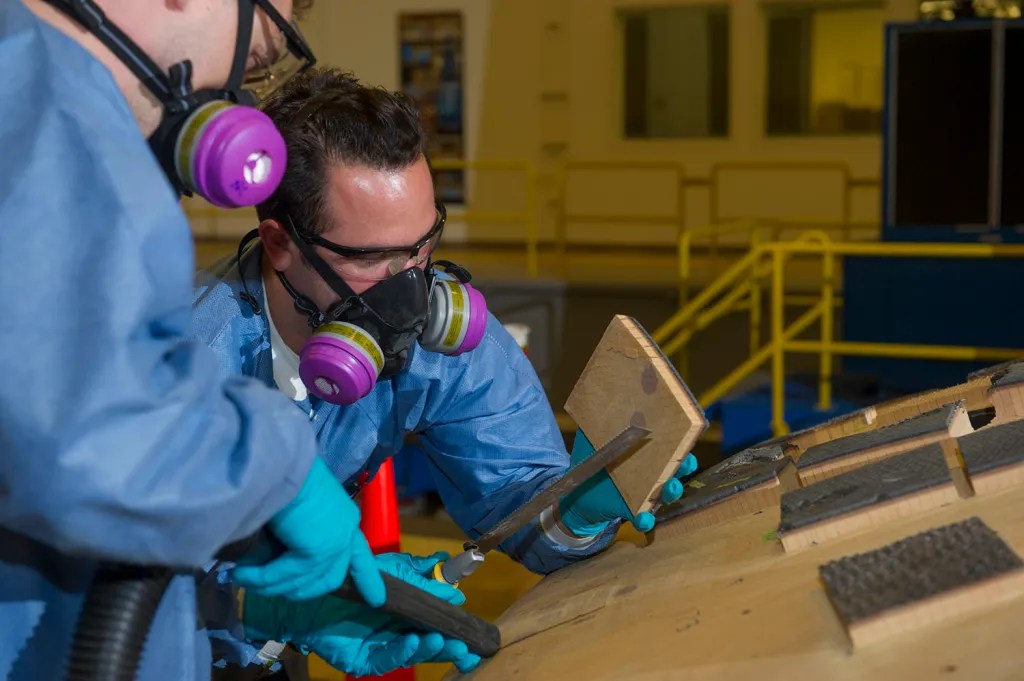
Marshall has also contributed to Orion heat shield work for the EFT-1 and Artemis I flights. The center led physical machining efforts for EFT-1 to remove the heat shield’s charred outer surface to permit researchers to study the material. Post-Artemis I, the Marshall team removed approximately 200 Avcoat samples for analysis and inspection, allowing engineers to perform non-destructive evaluation to “see” inside the heat shield at the facility.
Other contributions include support related to space and terrestrial environments, including radiation, plasma, sea states, atmosphere, and winds; and plume and aerothermodynamic analysis and consultation.
The LAS integration and transition to production operations is managed by Marshall with Lockheed Martin as the lead contractor. Marshall also provides fabrication, production, and assembly support to NASA teams across the Orion Program. This effort includes the integration of Orion and the SLS rocket.
Langley Research Center
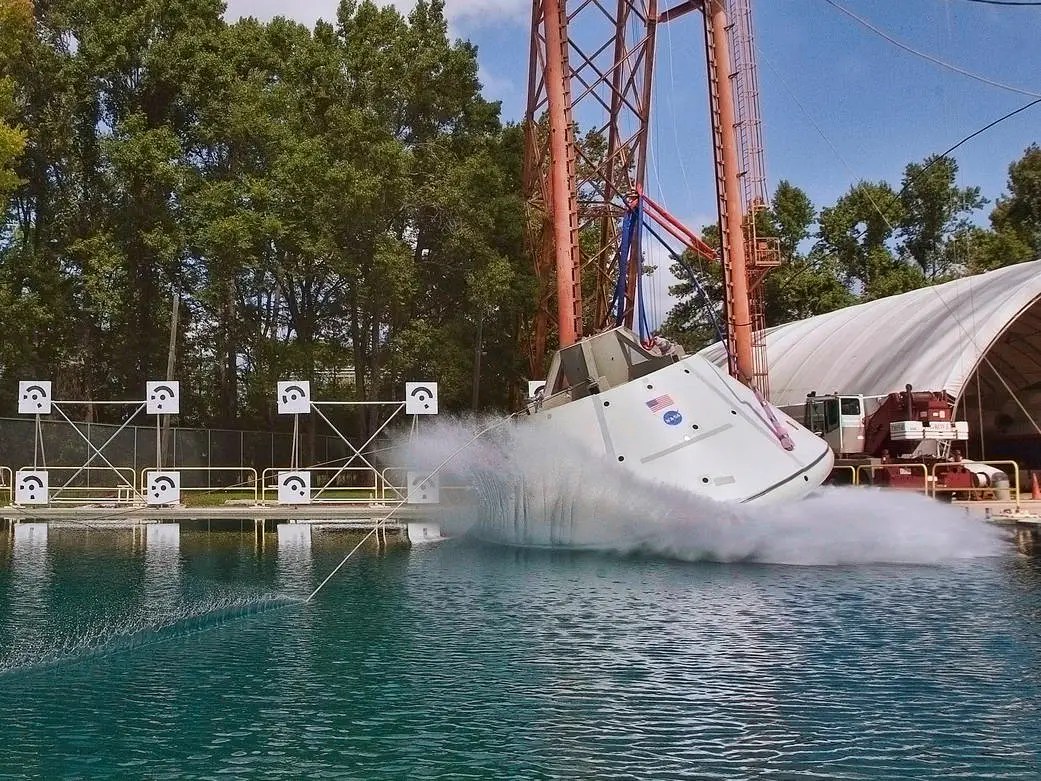
Landing and Impact Research FacilityEngineers performed water impact testing on Orion at the Hydro Impact Basin at NASA Langley’s Landing and Impact Research Facility in Hampton, Virginia. The water basin is 115 feet long, 90 feet wide, and 20 feet deep. The basin is located at the west end of the gantry, which is a 240-foot-high, 400-footlong, 265-foot-wide A-frame steel structure. The gantry provides the ability to control the orientation of the test article while imparting a vertical and horizontal impact velocity, which is required for human-rating spacecraft.
Ames Research Center
Ames Research Center in California’s Silicon Valley in has contributed to a variety of testing and development activities for the Orion spacecraft. Engineers at Ames helped develop and test materials for Orion’s heat shield and cone-shaped back shell using Ames’ Arc Jet Complex under various heating and pressure environments selected to simulate flight conditions. Using Ames’ Unitary Plan Wind Tunnel, teams also tested models of Orion at supersonic air speeds. Additionally, researchers at Ames used supercomputing capabilities to predict and better understand how different abort scenarios—from the launchpad to the edge of space—will affect vibration levels on the spacecraft.
Industry and International Partners
Lockheed MartinLockheed Martin is the lead contractor for the design, development testing, and production of the Orion spacecraft for NASA’s Artemis missions. As lead contractor for Orion, Lockheed Martin manufactures the spacecraft’s crew module, LAS, and crew module adapter. The company also integrates Orion’s service module into a completed spacecraft. Lockheed Martin’s Orion Program Office is based in Houston, where teams conduct Orion engineering and design. The team performs the majority of the Orion engineering work in Denver, manufactures the crew module pressure vessel and thermal protection materials at Michoud, and completes final assembly of the spacecraft in the O&C at Kennedy and at Lockheed Martin’s Spacecraft, Test, Assembly and Resource (STAR) Center nearby in Florida.

Northrop Grumman produces the launch abort motor and the attitude control motor for the Orion spacecraft’s LAS under an agreement with Lockheed Martin. The abort motor is manufactured at the company’s facilities in Magna, Promontory, and Clearfield, Utah, and the attitude control motor is produced at the company’s facility in Elkton, Maryland.
Aerojet RocketdyneAerojet Rocketdyne provides eight auxiliary engines and 12 reaction control thrusters for the Orion crew module as well as the jettison motor for the LAS, under contract to Lockheed Martin. The company also manufactures the high-pressure helium tanks that inflate Orion’s flotation system for water-based landings. Orion’s auxiliary engines and reaction control thrusters are produced at Aerojet Rocketdyne’s facility in Redmond, Washington. The jettison motor is a combined effort of the company’s facilities in Orange, Virginia, and Huntsville, Alabama.
ESA (European Space Agency) and AirbusOrion’s European Service Module is provided by ESA and built by main contractor Airbus. Workers across 10 European countries and the United States supply components for the service module, including Germany, Italy, Switzerland, France, Belgium, Sweden, Denmark, Norway, Spain, and the Netherlands. The final product is assembled at Airbus facilities in Bremen, Germany, before being shipped to NASA.

The post Management Roles and Facilities appeared first on NASA Science.