NASA’s Roman Launch Preparations Proceed

Por Elyna Niles-Carnes09/07/2026 às 19:340 visualizações
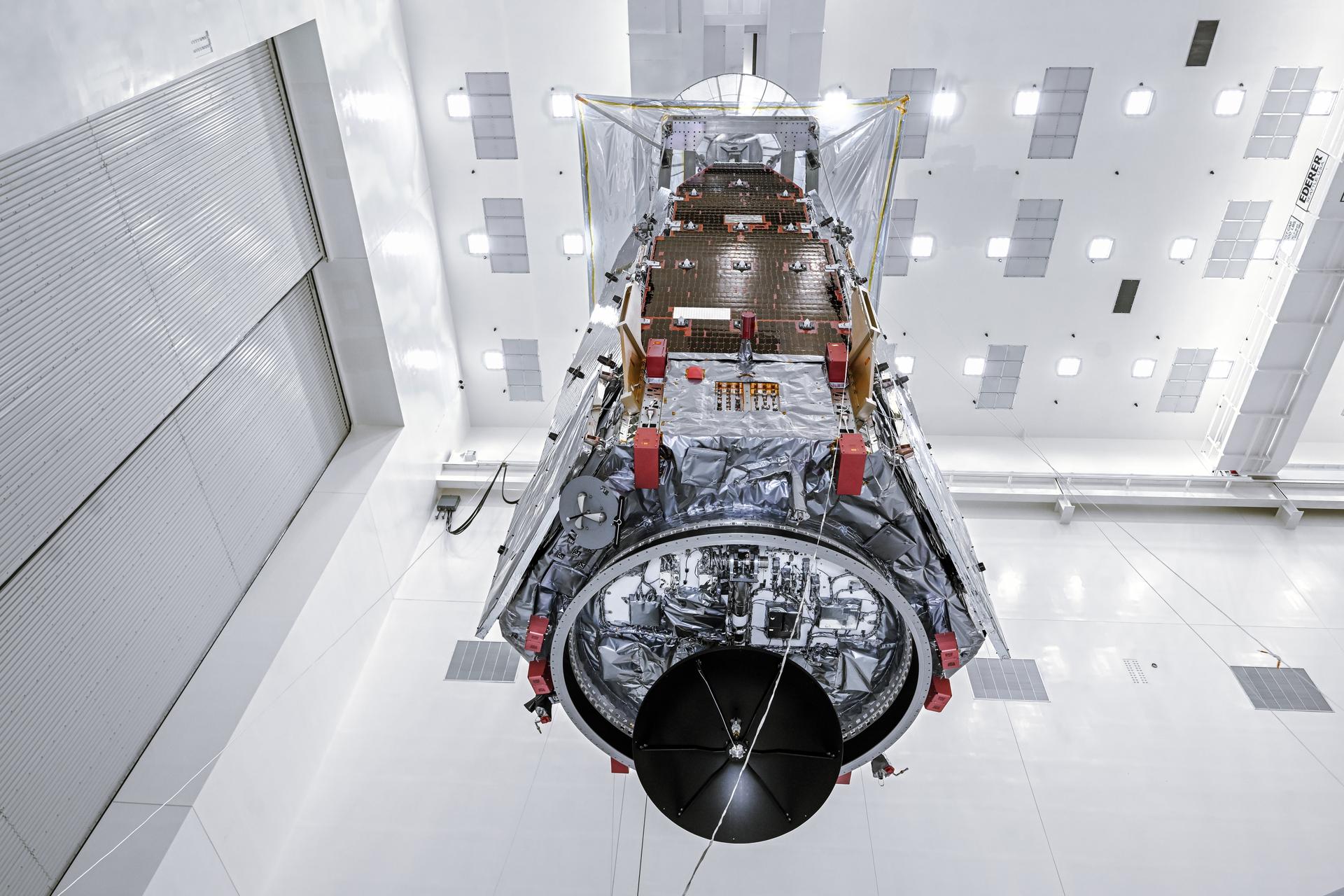
A large spacecraft suspended vertically inside a clean room, viewed from below. The spacecraft’s cylindrical base, wiring, and reflective insulation are visible, along with solar array panels folded along its sides. Bright overhead lights and white walls surround the vehicle. Photo credit: NASA/Sydney Rohde (Rocz)
NASA Clima

Technicians and engineers inside the Payload Hazardous Servicing Facility at NASA’s Kennedy Space Center in Florida use a crane to lift the agency’s Nancy Grace Roman Space Telescope to a specialized work stand Friday, June 26, 2026. NASA/Sydney Rohde (Rocz)
Technicians and engineers inside the Payload Hazardous Servicing Facility at NASA’s Kennedy Space Center in Florida use a crane to lift the agency’s Nancy Grace Roman Space Telescope to a specialized work stand Friday, June 26, 2026.
NASA/Sydney Rohde (Rocz)

With less than two months until the launch of NASA’s Nancy Grace Roman Space Telescope, engineers at NASA’s Kennedy Space Center in Florida are preparing the observatory for its trip to space.

Inside the Payload Hazardous Servicing Facility, technicians used large cranes to carefully lift Roman and place it onto a specialized work platform, known as the Pantheon. This step transitions the observatory from its shipping configuration to the operational configuration necessary to begin integration and test activities that will prepare it for encapsulation and launch. Engineers then powered up the observatory to perform system checkouts, ensuring the telescope is operating correctly following its arrival at Kennedy.

Throughout the coming weeks, technicians plan to test Roman’s six solar array panels, inspect the space telescope’s insulation and thermal blankets, and test the spacecraft’s propellant tanks. Once those tests are complete, they will load approximately 290 gallons of hydrazine fuel into the observatory before encapsulating it inside a SpaceX payload fairing, one of the final steps before launch.
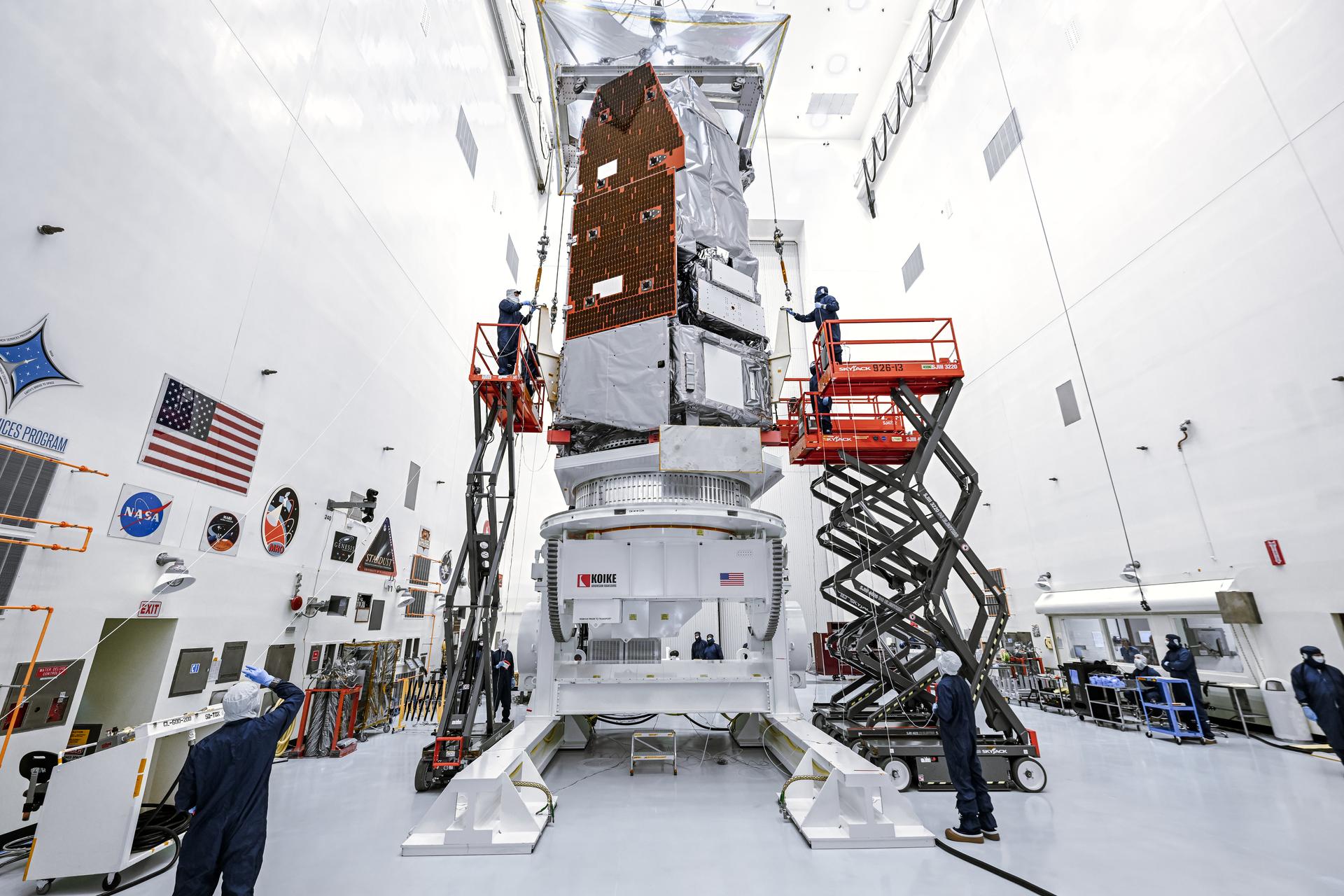
Technicians and engineers inside the Payload Hazardous Servicing Facility at NASA’s Kennedy Space Center in Florida use a crane to lift the agency’s Nancy Grace Roman Space Telescope to a specialized work stand Friday, June 26, 2026.NASA/Sydney Rohde (Rocz)
Technicians and engineers inside the Payload Hazardous Servicing Facility at NASA’s Kennedy Space Center in Florida use a crane to lift the agency’s Nancy Grace Roman Space Telescope to a specialized work stand Friday, June 26, 2026.
NASA/Sydney Rohde (Rocz)

NASA is targeting no earlier than Sunday, Aug. 30, for the space observatory’s launch on a SpaceX Falcon Heavy rocket from Launch Complex 39A at Kennedy. The liftoff will occur about nine months ahead of schedule.

Roman will travel to the Sun-Earth Lagrange point 2, or L2, about one million miles from Earth, where the Sun’s and Earth’s gravity balance out. Orbiting at L2 will give the telescope a stable, unobstructed view of the universe and keep it far enough away so that Earth won’t block much of its view. From this vantage point, Roman will help answer questions about dark matter, dark energy, and exoplanets.

Roman’s wide field of view and rapid survey capabilities will map billions of galaxies, discover new exoplanets, study black holes, and provide vast volumes of daily data for astronomers to analyze. The observatory will sample such a large volume of the cosmos that the mission will offer practically limitless opportunities for astronomers to conduct a broad range of additional science.

The post NASA’s Roman Launch Preparations Proceed appeared first on NASA Science.

Fonte
NASA Clima
Abrir original ↗
Esta notícia foi útil?

Debates 0

Seja o primeiro a contribuir com o debate.

Difunda suas informações e promova seu argumento

Não se acanhe de publicar alguma informação ou dado que possa ser positivo ou útil.

Para participar do debate, entre com sua conta ou crie uma gratuita.