
Roman’s Coronagraph Instrument demonstrates technology that blocks the glare from a host star’s light, allowing astronomers to directly image planets in orbit around other stars.
Masks and Optics
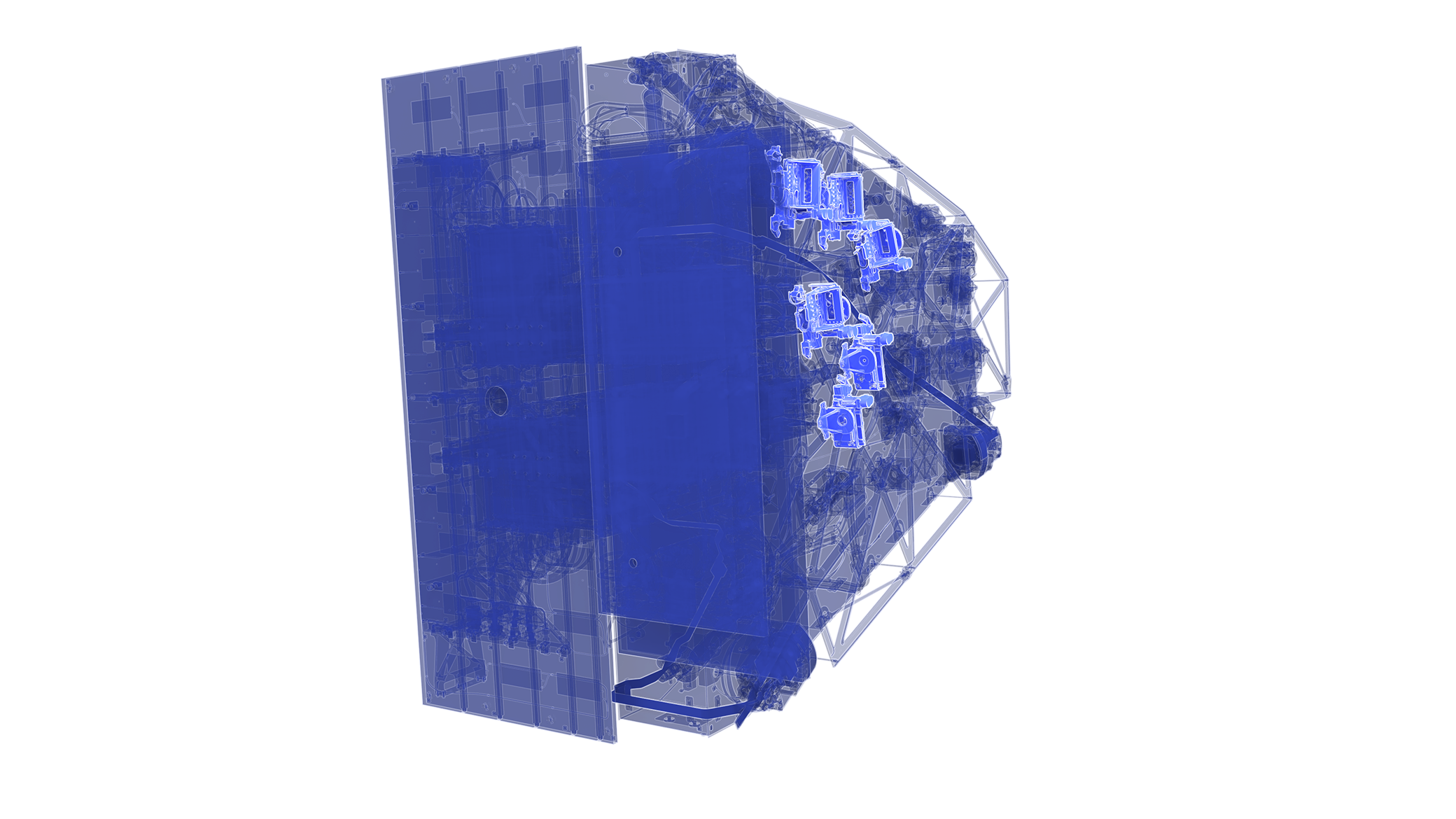
Coronagraph masks block most of the glare from stars to reveal faint orbiting planets and dusty debris disks. The mirrors and lenses are finely polished to minimize additional glare or image distortions. Color filters will select which wavelengths of light to observe. Wollaston prisms will help measure the polarization of the light from a star’s disk, which tells scientists about properties of its dust grains. A spectroscopy prism will spread a planet’s light into its constituent colors, allowing scientists to study its atmospheric composition. Precision alignment mechanisms will finely position the coronagraph masks so they can effectively block starlight.
Partner(s) : NASA’s Goddard Space Flight Center | NASA’s Jet Propulsion Lab (JPL) | Japanese Aerospace Exploration Agency (JAXA) | Optimax Systems Inc. | Max Planck Institute for Astronomy (MPIA) | Materion Corporation | II-VI Optical Systems Inc. | Laboratoire d’Astrophysique de Marseille (LAM) | Infinite Optics
Deformable Mirrors
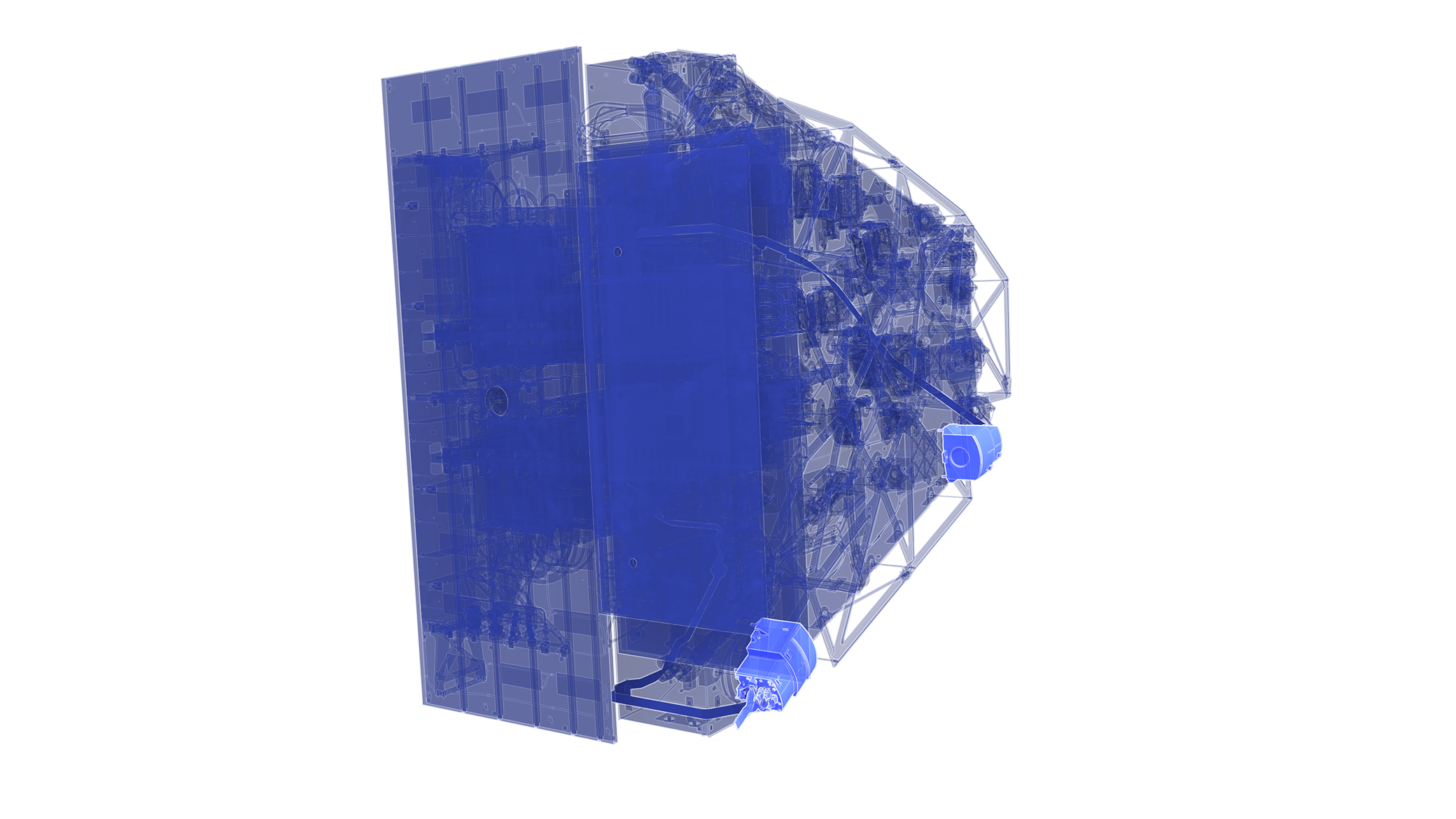
The two deformable mirrors will help remove remaining starlight. They can bend and flex, according to commands from the wavefront sensing and control system, to correct for any small imperfections in the surface of the other mirrors in the telescope or instrument. Each mirror is only about 2 inches (5 centimeters) across, yet has more than 1600 independent actuators to adjust its surface. Every actuator is independently commanded with a precision better than 62 picometers – less than the diameter of a helium atom. This new technology is used in modern ground-based telescopes but has never been part of a space-based coronagraph.
Partner(s) : NASA’s Jet Propulsion Lab (JPL) | Xinetics. | Topline Corp. | Laguna Components Inc. | Pioneer Circuits Inc. | Custom Interconnects LLC. | Surface Optics Corp. | Glenair
Wavefront Sensing and Control
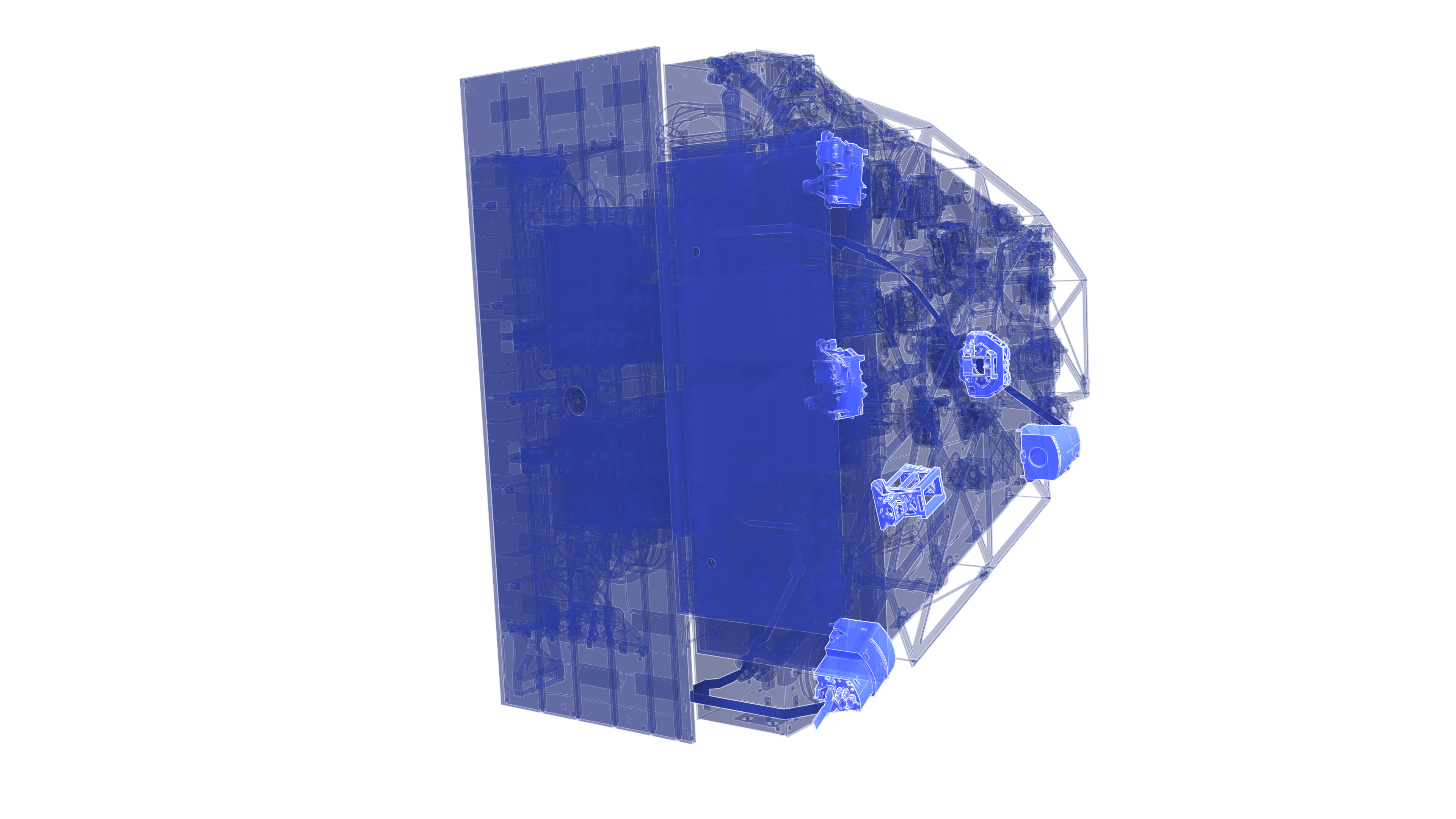
Roman’s wavefront sensing will measure the irregularities in the light waves caused by diffraction and optical imperfections in the telescope and instrument. It will analyze both the residual scattered starlight in the observation images and the light reflected by the coronagraph masks to sense errors like image motion, focus changes, and small imperfections in the shape of the optics. The control system will then send compensating commands to the deformable mirrors and other instrument elements.
Partner(s) : NASA’s Goddard Space Flight Center | NASA’s Jet Propulsion Lab (JPL) | University of Alabama – Huntsville
Electron-Multiplying CCD Detector
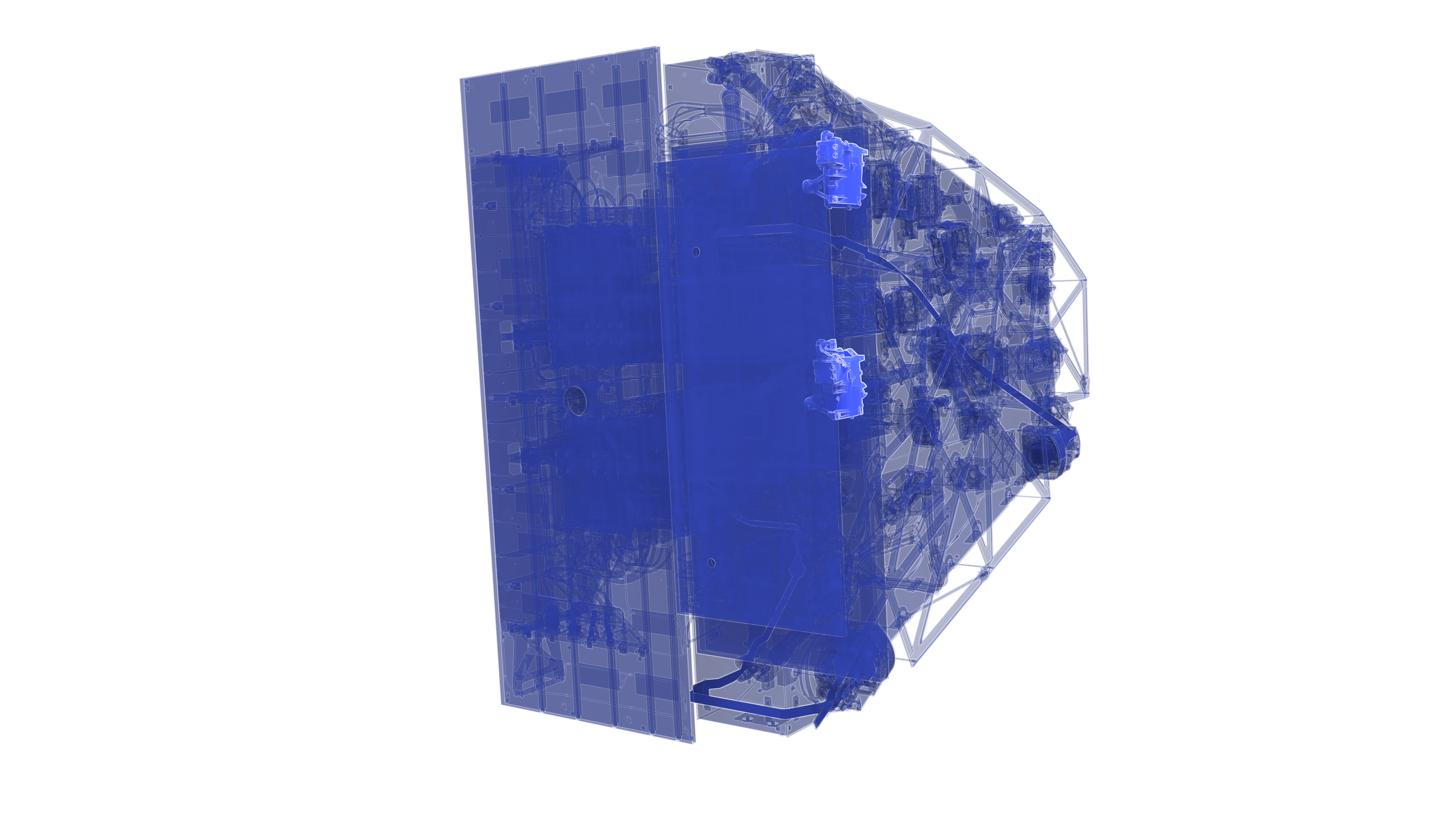
The planets and disks that the Coronagraph Instrument will image are so faint that their photons can arrive seconds apart. The charge coupled device in the EMCCD will detect these individual photons as they arrive. It has an operating temperature of about -130 degrees Fahrenheit (-90 degrees Celsius).
Partner(s) : NASA’s Jet Propulsion Lab (JPL) | Teledyne e2v | ABB Ltd. | NuVu Cameras | European Space Agency (ESA)
Optical Bench Structure Assembly
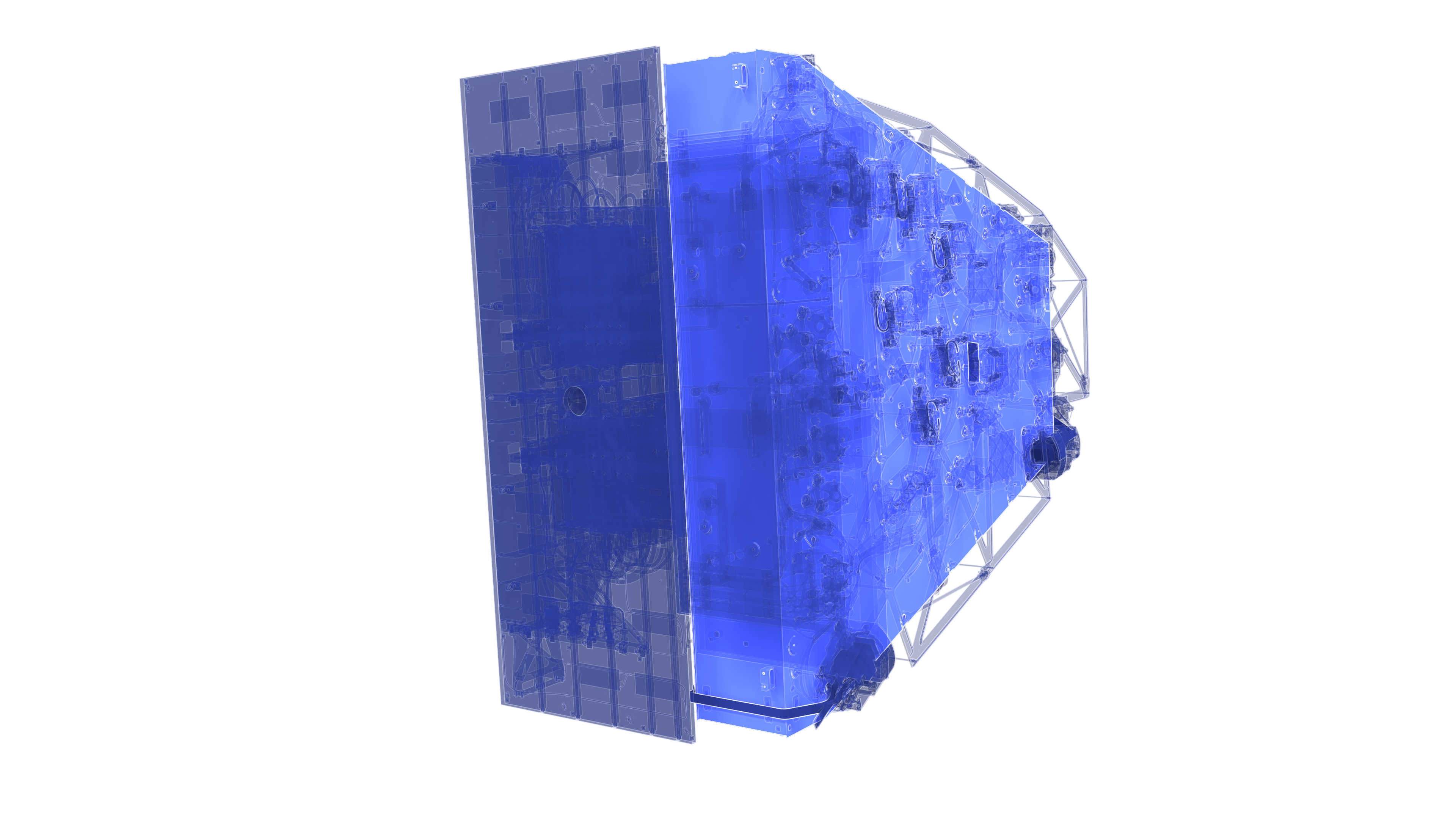
The optical bench structure assembly provides a very stable base on which all of the optics (mirrors, lenses, masks, and filters) are mounted. The bench is made from a composite material that is both light and strong. It is mounted to the observatory through a set of bipods to a bolted interface. The thermal control system will precisely regulate the temperatures of the bench, structures, mechanisms, and optics, which is crucial for optimal image quality.
Partner(s) : NASA’s Jet Propulsion Lab (JPL) | Applied Sciences Laboratory | ATK Space Systems
Electronics
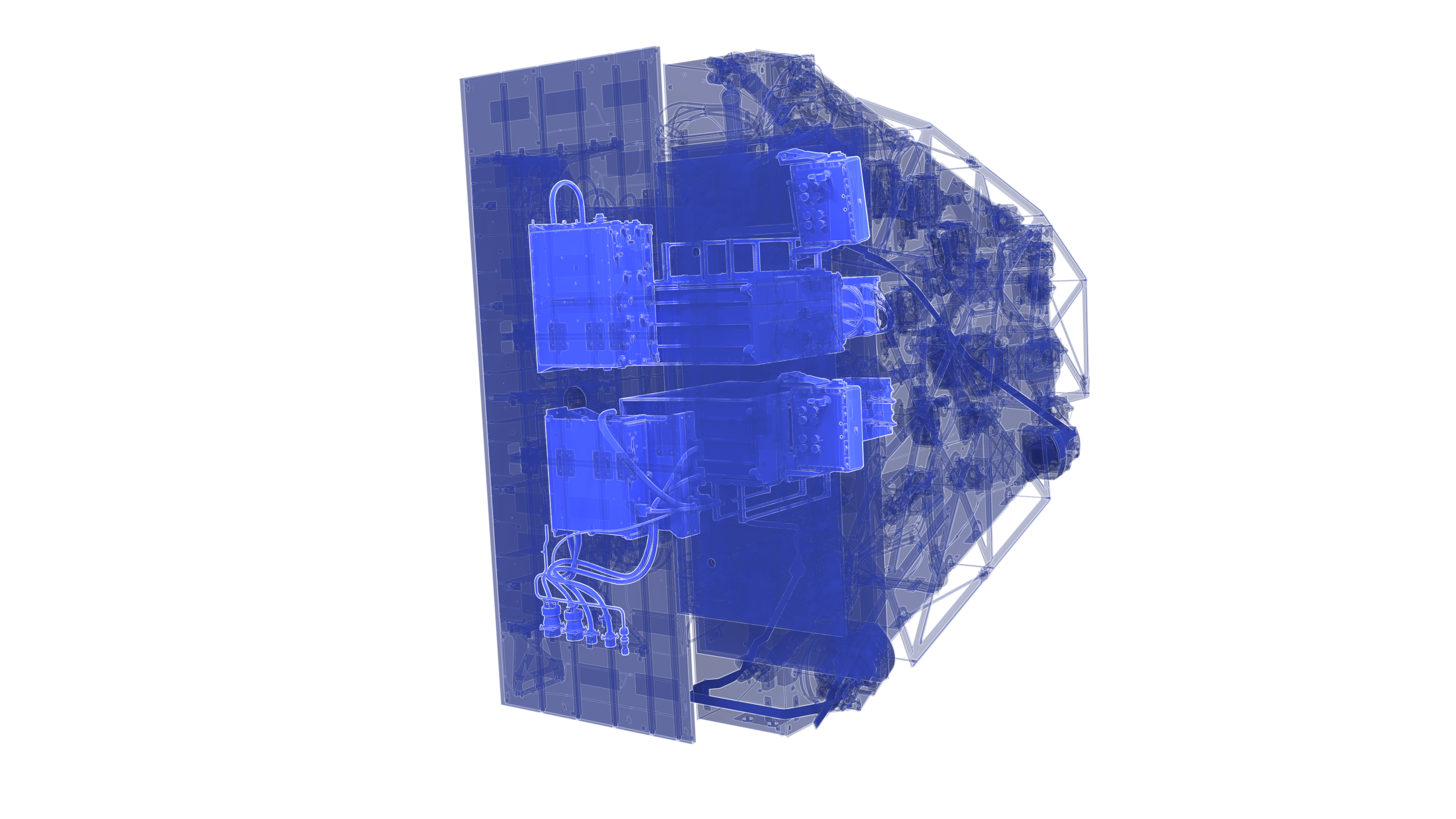
The electronics control the deformable mirrors, cameras, and other mechanisms. They are space-qualified and radiation hardened to survive the rigors of spending years in orbit. The custom-designed deformable mirror electronics control more than 1600 independent actuators on each deformable mirror – more than 3200 total. The thermal control electronics send commands to heaters that will keep key pieces of hardware temperature-stabilized to within a few millikelvin. To help counteract spacecraft jitter, onboard processing will receive 1000 images per second from a camera and calculate tilt/tip commands to send to the wavefront control system.
Partner(s) : NASA’s Jet Propulsion Lab (JPL) | Motiv Space Systems | Avnet Inc | Arrow Electronics Inc. | Microsemi SOC Corp. | Richardson RFPD Inc. | TTI Inc. | B&A Engineering Systems Inc. | Raytheon
Coronagraph
The Nancy Grace Roman Space Telescope will test new technologies for space-based planet hunting. The mission aims to photograph worlds and dusty disks around nearby stars with detail up to…
Learn More About Coronagraph
The post Coronagraph Systems appeared first on NASA Science.