
The National Land Transportation Agency - ANTT is preparing the contract that will govern, for the next thirty years, the railway that crosses the Catarinense Mountains.And the deadline for any citizen to provide feedback on the text ends on Monday, August 10, 2026, at 11:59 PM. The Unyielding downloaded and reviewed the twenty-four documents submitted to...public consultationThe document includes approximately 2.3 gigabytes of minutes, notebooks, and studies. The 292.76 km (182 miles) stretch between Mafra and Lages, currently without train service, is described in the object of the future concession, but it does not appear in the mandatory investment plan, which is the part of the contract where projects are given a deadline, target, and budget.
This is the first in a series: the report presents here what the documents say, what each party has already declared publicly about the case in a hearing at the Chamber of Deputies, how to contribute to the consultation before it closes, and where to consult each cited document, all preserved and available for verification.
What is at stake?
The current contract for the South Network, operated by Rumo since 2016 and stemming from the 1990s concession, is nearing its end. To replace it, the Union will...It proposes to divide the network into three independent lots.Paraná Corridor - Santa Catarina, Rio Grande Corridor and Mercosur Corridor, also referred to as the Interstate Corridor in technical documents. Each lot will have its own tender and contract, with a term of thirty years from assumption.
Mafra and Lages are located in the Mercosur Corridor.Bidding document outlineIt describes the lot, item 1.2.3 on page 10, as the network that "starts from Mafra (SC), (...) crosses the state of Santa Catarina and reaches Rio Grande do Sul, continuing until Roca Sales (RS)", totaling 1,865.78 km.


This is the section whose interruption the ANTT considered irregular: according toInformative Note No. 65/2025 from the Ministry of Transportation, forwarded to the Chamber of Deputies in response to Information Request No. 3834/2025, the Ministry was not previously notified of the stop; the National Association of Cargo Transport Users - ANUT filed a complaint; Raízen and Vibra Energia expressed interest in continuing fuel transport; and the section moved, before the 2024 floods, from 8,000 to 10,000 tons per month. The ANTT considered that the stoppage violated Resolution ANTT No. 5,945, imposed a fine, and notified Rumo to resume operations within thirty days. Customers of the section reported to the ANTT, and the same note records their report, that transferring the load to the road increased road freight by about 20%. By the equivalence adopted in the document itself, where each tank car corresponds to two or two and a half tank trucks, the change added from 80 to 100 trucks per week to the region's highways.

The line was not born from private initiative: the section between Mafra and Lages was constructed between 1963 and 1965 by2nd Railway BattalionThe South Main Line project was completed in 1968 with the installation of the last steel beam at kilometer 349, 36 kilometers south of Lages, where a monument now stands featuring the insignia of the railway battalions that built it. Passenger transport continued until 1978, and the mixed train service—carrying both cargo and passengers in the same train—ran until 1983.

2. What do the documents in review say?
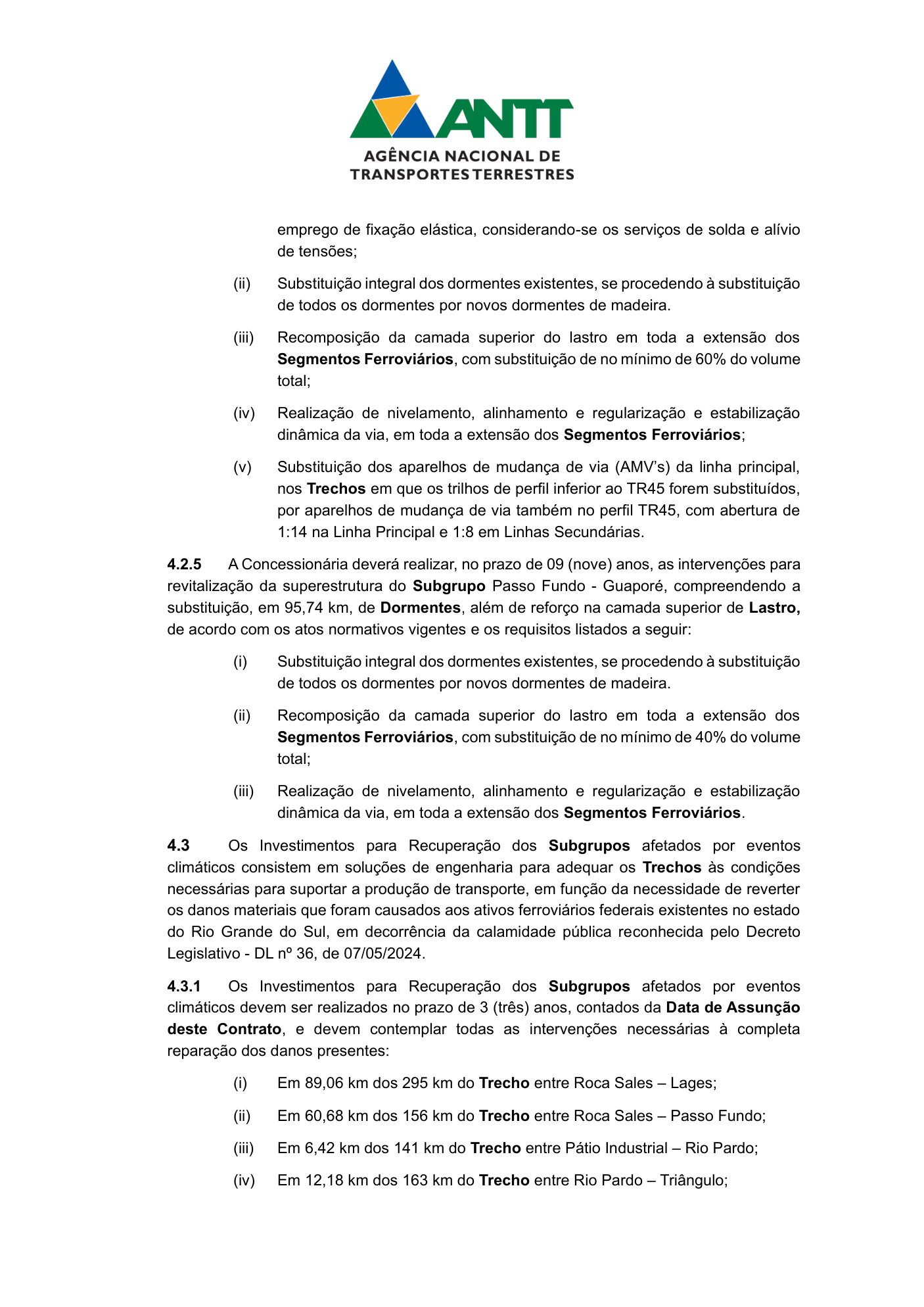
The text: "O [The] jornal 'O Estado de S. Paulo' completa 90 anos de fundação em 2023, celebrando uma história rica em jornalismo e influência na mídia brasileira."Obligation NotebookIt is Annex 1 of the contract and the document that turns the alignment into a work obligation. The one for the Interstate Corridor has forty pages, and not once does the word "Mafra" appear. "Lages" appears twice, always within the expression "Section between Roca Sales – Lages," which designates the southern tip affected by the floods—item 4.3 of the same notebook limits these works to the damages caused "to federal railway assets in the state of Rio Grande do Sul" by the calamity in May 2024.
The mandatory investments in infrastructure for the corridor are four, all located in Rio Grande do Sul, with deadlines and costs defined: Roca Sales - General Luz, Industrial Yard - General Luz, Tigre - Cacequi, and Passo Fundo - Guaporé. The recovery of climate damage, with a three-year deadline, only reaches Lages partially through the south: "In 89.06 km out of the 295 km stretch between Roca Sales - Lages," states item 4.3.1 on page 13.
The Obligations Notebook states what will be mandatory to do. TheEngineering Studywhich provides the basis for modeling, produced by the Nova Malha Sul Consortium, demonstrates how the Catarinense segment was evaluated. The study divides the network into clusters, which are sets of segments examined in blocks, and Mafra - Lages is cluster INTE_04. In Table 8-2, pages 74 and 75, the twelve lines of this cluster repeat the same observation about the route, which is the set of tracks, sleepers, and bed where the train passes:
The route already has favorable physical conditions, not justifying immediate interventions.
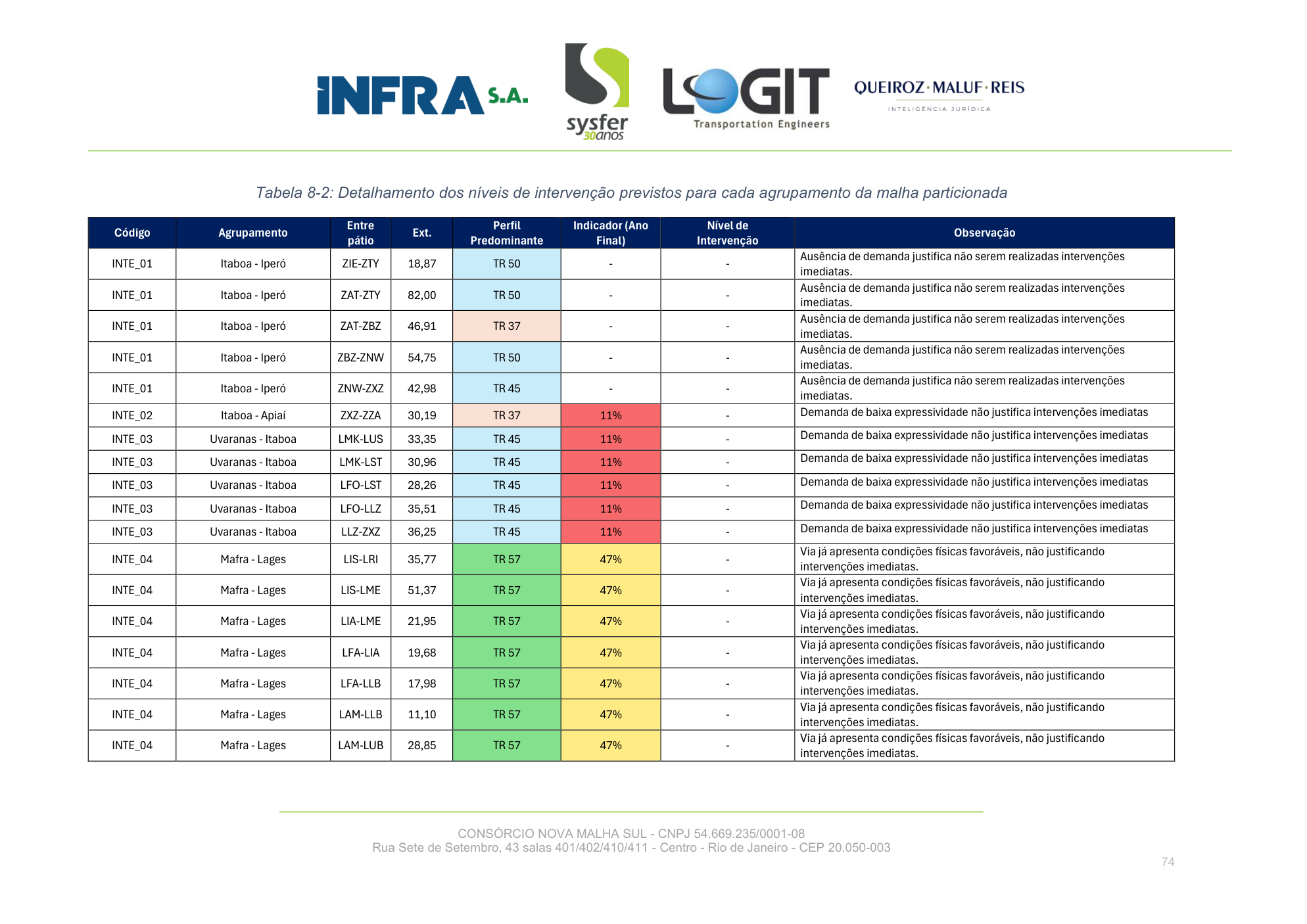
The same study projects cargo on the segment over the thirty-year concession period, from 1.17 million tons in 2027 to 1.91 million in 2056, and ranks it fifth among fourteen subgroups in a relevance indicator. However, INTE_04 does not appear in the budget and schedule tables, and there is no cost sheet for it among those attached to the study.
MeanwhileOperational StudyAnother document in the same package describes the segment differently. In the inter-station spreadsheet, eight out of twelve segments are marked as "Interrupted," and the first one, from Mafra to Itaiópolis, has the justification phrase "Currently non-operational segment" with installed capacity equal to zero.
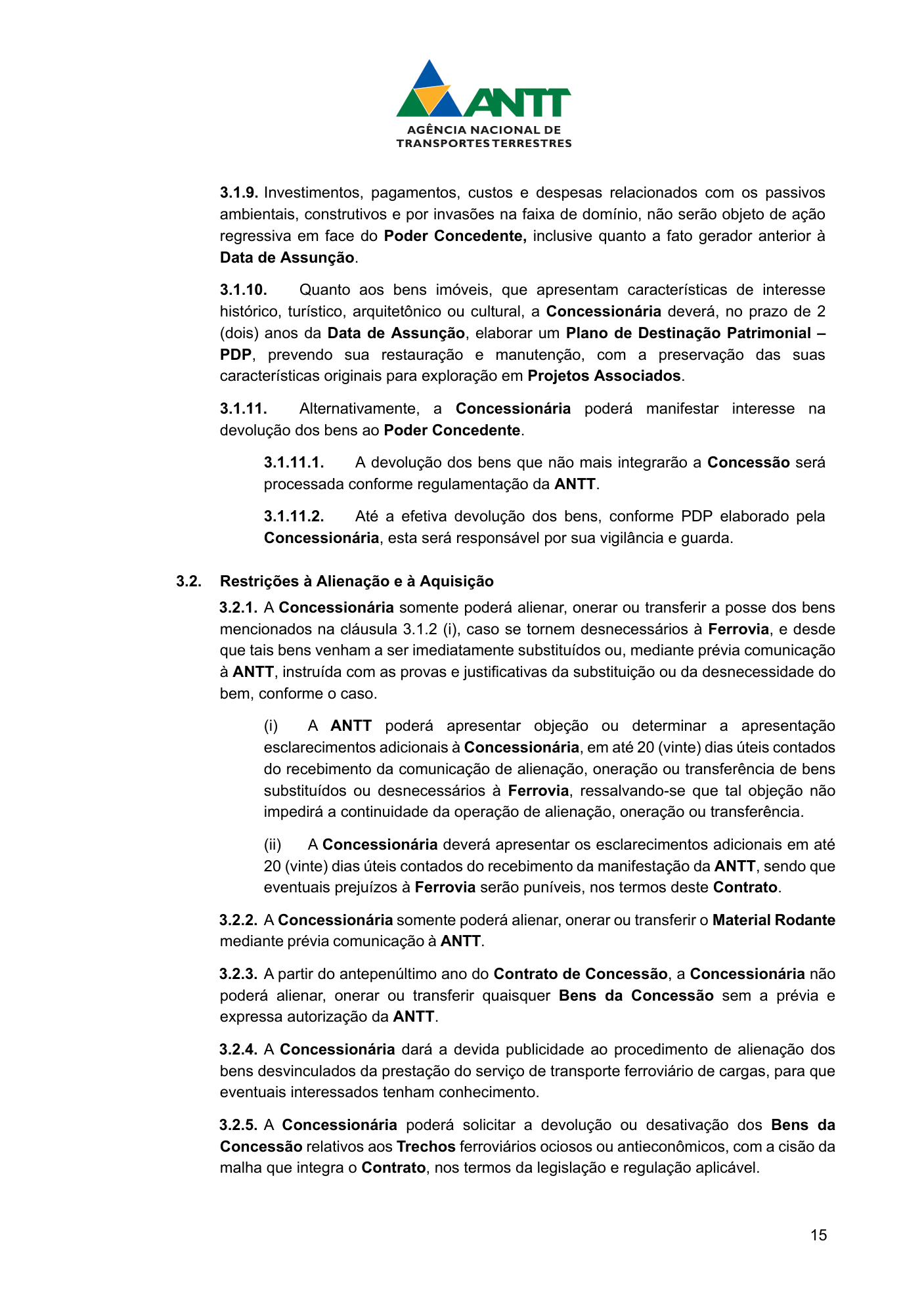
Finally, thecontract minutestates, in clause 3.2.5 on page 15, that the future concessionaire may "request the return or deactivation of the Concession Assets related to idle or uneconomical railway segments." The criterion for characterizing a segment as uneconomical is in the following item and is alternative: it is sufficient, among other hypotheses, for "the absence of commercial traffic."
3. What do the parties say?
At a public hearing of the Committee on Transportation and Infrastructure of the Chamber of Deputies on April 7, 2026, speakers addressed the South Grid, including the concessionaire, ANTT (National Agency for Transport Regulation), the Federal Public Ministry - MPF, users, and workers. The positions are as follows:Minutes of the session..
The concessionaire:Ticiano Augusto Callai Bragatto, who represented Rumo Malha Sul, attributed the shrinking of the network to unfulfilled load forecasts since the 1990s bid and the end in 1997 of the rule requiring shippers to contract rail for hazardous materials. He stated that this is "the reason these segments are no longer economically viable, especially with the regulatory burden present," and that "in the last 10 years, we have not seen a significant reduction in the network, except for the climate disaster in May 2024." He also presented the numbers the company claims to have invested: R$ 17.8 billion over 29 years across the three concessionaires who operated the network, more than half of which was invested in the last decade, with a cash burn of approximately R$ 320 million per year and controller investments exceeding R$ 5 billion.
The Federal Public Ministry:Fernando de Almeida Martins, Regional Republic Attorney, who represented the General Attorney's Office, stated that "the South Mesh has over 7,000 kilometers, of which two-thirds to three-quarters are currently abandoned," and expressed surprise at the proposal for fragmentation. Regarding Santa Catarina, he was specific, and the cut-out section covers this report: with the proposed design, he said, "eradication will not reach 100% due to the São Francisco do Sul Port," so whoever takes over the network "will save that piece, but the rest, or 90%, will also go." This is an institutional statement at a parliamentary hearing, not a judicial decision: none of the body's procedures on the matter have led to a conviction.

The users:Luis Henrique Teixeira Baldez, President of ANUT, the entity that reported the halt, responded to the argument of lack of demand by reversing the cause-and-effect order: "Insecurity leads immediately for companies to seek alternatives, migrating to road transport. (...) They say: 'No, but there is no demand.' It's clear that there isn't, because the demand that was trying to be allocated to that mode of transport goes elsewhere." He opposed fragmentation with an arithmetic argument ("I have a financially viable mesh and two financially inviable ones") and maintained that with the proposed design, "we are declaring that we will eradicate railway lines in Santa Catarina and Rio Grande do Sul."
The workers:João Edacir Calegari Morais, President of the Railway Workers' Union of Rio Grande do Sul - Sindifergs, attributed the trains' slow speed to material causes: "What happens is that trains run at 10 or 15 kilometers per hour due to a lack of investment in infrastructure."
There is also an ongoing legal dispute: the State of Santa Catarina filed Common Procedure No. 5024423-10.2026.4.04.7200, at the 3rd Federal Court in Florianópolis, to suspend this public hearing.The preliminary injunction was denied on July 15, 2026.However, the court ordered the Union and ANTT to justify the alleged lack of access by the state and the Southern Development and Integration Council (Codesul) to the technical studies.
If the case has reached this point with documentation, it is due to identifiable actions: the formal complaint from ANUT, chaired by Luis Henrique Teixeira Baldez; the public statement by Regional Prosecutor Fernando de Almeida Martins; the alert from Sindifergs president João Edacir Calegari Morais on underinvestment; Request for Information No. 3834/2025 from the Committee on Transportation and Highways in the Chamber of Deputies, which forced the Ministry of Transport to put the numbers on paper; the state of Santa Catarina's trip to federal court; and the MPF's civil inquiry in Mafra regarding the line and buildings' maintenance.

4. How to contribute, step by step
Anyone can contribute, and the contribution will be recorded in the process: the system is ParticipANTT, and the event is Public Hearing No. 11/2026.
- Openhttps://participantt.antt.gov.br/events?CodigoAudiencia=674And register or log in, in the top left corner of the page.
- On the tabContributeChoose the topic corresponding to the document you want to comment on: there are thirty topics, one per document or set of devices, and the contribution yields more when released under the right topic, rather than all in one field. Be mindful of the name: no topic is called "Interstate Corridor", which is how technical files refer to the Mercosul Corridor; on the screen, the topics in this batch are "Mercosul Corridor Obligations Notebook", "Mercosul Corridor Contract Draft" and so forth.
- Indicate the exact device (e.g., "Mercosul Corridor Obligations Notebook, Appendix A, item 4.2"), state whether the proposal is for inclusion, alteration, suppression or correction, write down the suggested text and justification.
- Keep the protocol proof: it serves as evidence that the point was raised before ANTT's decision, and it is useful for tracking responses and making representations to control bodies.
- Those who prefer speaking over writing can consult, within the same system, Public Hearing Procedures No. 11/2026, which outline rules for statements.
Four points suggested by the reading of the documents for those who want to contribute on the Catarinense section: request the inclusion of a Mafra – Lages subgroup in Appendix A of the Obligations Notebook, with extension, deadline, cost and mandatory start date; request correction of item 1.1 of this notebook, which applies to the "Concessionaire of 'Paraná - Santa Catarina' Railway"; request that the return of the section for "absence of commercial traffic" not apply when the absence of trains resulted from an interruption established in a process by ANTT itself; and request a verifiable obligation for periodic circulation of line records and patrimonial surveillance on a section without traffic, with periodic documentary proof.
5. Where to consult the documents
Every document cited in this report was downloaded, verified, and preserved with origin registration, size, date and time of collection, and SHA-256 verification code, which allows anyone to confirm that the file has not been altered since. The ten main documents are published, along with their verification codes, on theTronco Sul ArchiveThe rest of the collection, with 108 documents, can be requested through the page.Suggest a Topic.
| Document | What it brings |
|---|---|
| Draft tender document for the three corridors | Description of lots; Mafra in the object of the Mercosul Corridor, p. 10 |
| Draft contract for the Mercosul Corridor | Clause 3.2.5, return of idle or anti-economic sections, pp. 15 and 16 |
| Obligatory Runner's Handbook | Mandatory investment plan; absence of Mafra – Lages |
| Engineering Study of the Interstate Corridor | Road diagnosis, projected load, and the statement about favorable physical conditions |
| Operational Study, Volume I | Inter-pavement sheet with interrupted segments |
| Letter No. 1714/2025/ASPAR/GM and Informative Note No. 65/2025 | Fine, order to retake, freight and additional trucks |
| Transcription notes from the Chamber, April 7, 2026 | Protests from Rumo, ANTT, MPF, ANUT, and Sindifergs |
The original addresses for each item are in the Sources section at the end, and the preserved copy by Insubornável is for the case that the document goes offline or is replaced, which is common in public consultation, and to allow comparison between versions.
6. What's next?
The text provided is incomplete, so here is the translation based on what was given: "The article:"Second part of this seriesAlready published, the newspaper article reads the contract minute clause by clause and shows that the future concessionaire will have the duty to preserve the 292.76 km between Mafra and Lages, but will not have a date to put a train into operation there - and that the contract provides for the return of the section precisely because there is no train.
This investigation continues, and the upcoming sections will address what is still unresolved: the liability of the concession that is ending and who pays for recovery; what the railway corridor generates through uses other than trains; the precedent of concessions from the same group rescinded in Argentina in 2013; and how the railway infrastructure appears, or does not appear, in Brazilian doctrine on the protection of critical infrastructures.
The public response remains pending regarding the sanctioning process number and the infraction report against the concessionaire, the value and status of the fine, theinspection reports scheduled for April and August 2025on the stretch and the date of the last commercial circulation between Mafra and Lages. Insubornável will forward these questions to Rumo, ANTT, the Ministry of Transportation, and the National Department of Transport Infrastructure - DNIT, with a deadline and delivery record, and will publish the answers in full or, if none are provided, the date, channel, questions, and granted deadline.
Anyone with a document, a dated photograph of the stretch, communication received from the concessionaire, or information about the last train circulation between Mafra and Lages can reach out to the reporting team via the pageSuggest a Topicor by emailnewsroom@insubornavel.com.
7. To explore: the sources, with notes
7.1 Official documents and public records
- Public Hearing No. 11/2026 - ANTT, with all annexes and contribution form. Deadline until August 10, 2026, at 11:59 PM.https://participantt.antt.gov.br/events?CodigoAudiencia=674 The twenty-four annexes were downloaded and verified by SHA-256 code on August 7, 2026; the cited pages refer to these files thus preserved.
- Project page for the new concession of the South Mesh - ANTT.https://www.gov.br/antt/en-us/topics/railways/new-railway-projects/south-mesh-auction Design of the three corridors and process schedule.
- Office No. 1714/2025/ASPAR/GM from the Ministry of Transportation, with Informative Note No. 65/2025 attached, process No. 50000.032910/2025-96.https://www.camara.leg.br/proposicoesWeb/prop_mostrarintegra?codteor=2998365&filename=Tramitacao-RIC+3834%2F2025 Source of the lack of prior communication, ANUT's denunciation, tonnage, freight increase, additional tank trucks, fine, and retake order.
- Steno notes from the public hearing on April 7, 2026, Committee on Viation and Transports of the Chamber of Deputies.https://escriba.camara.leg.br/escriba-servicosweb/html/81271 Source for all statements attributed in this report to Bragatto, Almeida Martins, Baldez, and Calegari Morais; copy preserved by Insubornável on August 7, 2026.
- Steno notes from the previous hearing where ANTT addressed the interruption of the segment.https://escriba.camara.leg.br/escriba-servicosweb/html/76832 Registration of the statement that the interruption was unauthorized and that the infringement process is under defense.
- Planning of the Annual Fiscalization Plan 2025 — ANTT, process nº 50500.182054/2024-05.https://www.gov.br/antt/pt-br/assuntos/ferrovias/fiscalizacao-e-infraestrutura/fiscalizacao/2025/anexo-a-programacao-paf-2025.pdf Provides for inspection on April 4, 2025 between Lages and Mafra and fiscalization from August 18 to 22, 2025 on the axis Mafra – Lages – Vacaria; final reports are not published.
- Court news of the denial of a preliminary injunction to the State of Santa Catarina on July 15, 2026.https://www.trf4.jus.br/trf4/controlador.php?acao=noticia_visualizar&id_noticia=30308 The decision maintained the hearing but demanded justification regarding the State's and Codesul's access to the studies.
- Electronic Diary of the MPF of December 11, 2025 — instauration of Civil Inquiry nº 1.33.005.000012/2025-54 in Mafra.https://transparencia.mpf.mp.br/conteudo/diarios-e-boletins/diario-eletronico-dmpf-e/2025/DMPF-EXTRAJUDICIAL-2025-12-11.pdf Investigates the conservation and abandonment of buildings and the railway line in the concession area.
- Office from the Coordinated Action South Mesh of the MPF, dated February 27, 2026.https://www.mpf.mp.br/o-mpf/unidades/pr-rs/noticias/oficio_malhasul_acao_coordenada.pdf Core element of the coordinated action on service continuity, asset preservation, and future concession.
7.2 Who monitors and defends the Railway
- ANUT — National Association of Freight Transport Users, author of the complaint about the shutdown of the section.https://anut.org.br/ The website maintains an open social participation framework, including this audience, and a railway fare simulator.
- ABPF — Brazilian Association for Railway Preservation, a non-profit civil entity dedicated to railroad heritage.https://www.abpf.com.br/ It keeps a dynamic museum and tourist train inRio Negrinho, a town next to Mafra.
- Rail Stations of Brazil, by Ralph Mennucci Giesbrecht — a page on the South Main Trunk, station by station, from Mafra to General Luz.https://www.estacoesferroviarias.com.br/sc_troncosul/tronco_sul.htm History of the Mafra-Lajes line: built between 1963 and 1965 by the 2nd Railway Battalion, with passenger service until 1978.
- "Pilgrimage on the South Trunk", by Elvis Pfützenreuter — field report on the Mafra–Itaiópolis section, featuring station photos and notes on the 37 tunnels in Santa Catarina.https://epxx.co/artigos/troncosul.html The author grants permission to quote excerpts with reference to the author and the source.
- AMURC — Association of Municipalities of the Contestado Region, which submitted a technical contribution dedicated to the Mafra–Lages section at this hearing.https://participantt.antt.gov.br/events?CodigoAudiencia=674 Requests full maintenance of the section, protection clauses for assets, prohibition of non-indemnized return, use by tourist trains and independent operators, and cooperation with the Brazilian Army for recovery studies.
- AMPLANORTE — Association of Municipalities of the Northern Catarinense Plateau, headquartered in Mafra, which also sent letters to the hearing.https://www.amplanorte.org.br/ The two associations are, so far, the institutional actors who defend the stretch within the ANTT process.
- Carlos Latuff - photographer and cartoonist, author of the record of the Lages station in April 2004.https://ferroviasdobrasil.blogspot.com/ He authorized in writing, on August 7, 2026, the reproduction of the photographs used in this report.
Produced with Claude Fable 5 (Anthropic, AI), under the direction and responsibility of Benito Juarez.
Style note - The Unyielding writes with the reverential uppercase of Classical Portuguese and extends it to all office preceded by name: the Engineer, the Anthropologist, the Shine-maker - at the same level as the Governor.